
NEWS
Muse Spark Open Puts a Frontier Model on Two Macs
Meta’s Muse Spark Open is the top US open-weight model, yet it needs two M5 Ultra Mac Studios, trails Chinese labs on coding, and taxes large API hosts.

Meta Superintelligence Labs released Muse Spark Open on October 15, 2026, an open-weight model with 816 billion total parameters that the company calls the most capable US one to date. The pitch is that you can run it at home.
The local path is two M5 Ultra Mac Studios, each with up to 512GB of unified memory. Chinese open models still lead it on the main intelligence index and on terminal coding, and the license adds a $20 million gate for large model hosts.
Muse Spark Open Ships as 816B Open Weights
The model is a sparse mixture-of-experts network. Of those 816 billion parameters, 42 billion fire on each token, drawn from 256 experts with 8 routed at a time across 62 layers, according to the Hugging Face model card from Meta Superintelligence Labs.
It is natively multimodal on the way in and text-only on the way out. Inputs are text, image, video, and audio through a 1.8 billion parameter Perception Encoder. The context window is 1 million tokens. Meta trained it on data from more than 100 languages and aimed it at long-horizon agent work, software engineering, and multi-step reasoning.
The 816B total and 42B active card is gated. Hugging Face asks for a full legal name, date of birth, and organisation before the files unlock. Weights sit in BF16 and NVFP4. Hosted APIs went live the same day at Baseten, Fireworks AI, Groq, Modal, Nebius, OpenRouter, and Together AI. Copies also landed on Amazon SageMaker AI, Google Cloud Model Garden, Hugging Face, and Microsoft Foundry Models.
MODEL CARD AT A GLANCE
- Size: 816 billion total parameters, 42 billion active per token, 256 experts with 8 routed.
- Context: 1 million tokens at inference, vocabulary of 202,048.
- Hardware floor: 700GB of VRAM for NVFP4, 2TB for BF16, or two M5 Ultra Mac Studios with MLX.
- Default decode: reasoning effort at xhigh, temperature 1.0, top_p 1.0, top_k off.
PyTorch’s own post says this open build shares its base with Muse Spark 1.3 and adds extra safety post-training so it can sit behind fewer system guardrails. Meta does not serve the weights on its own API. Developers who want to tune it are pointed at TorchTitan for supervised fine-tuning, LoRA, and reinforcement learning.
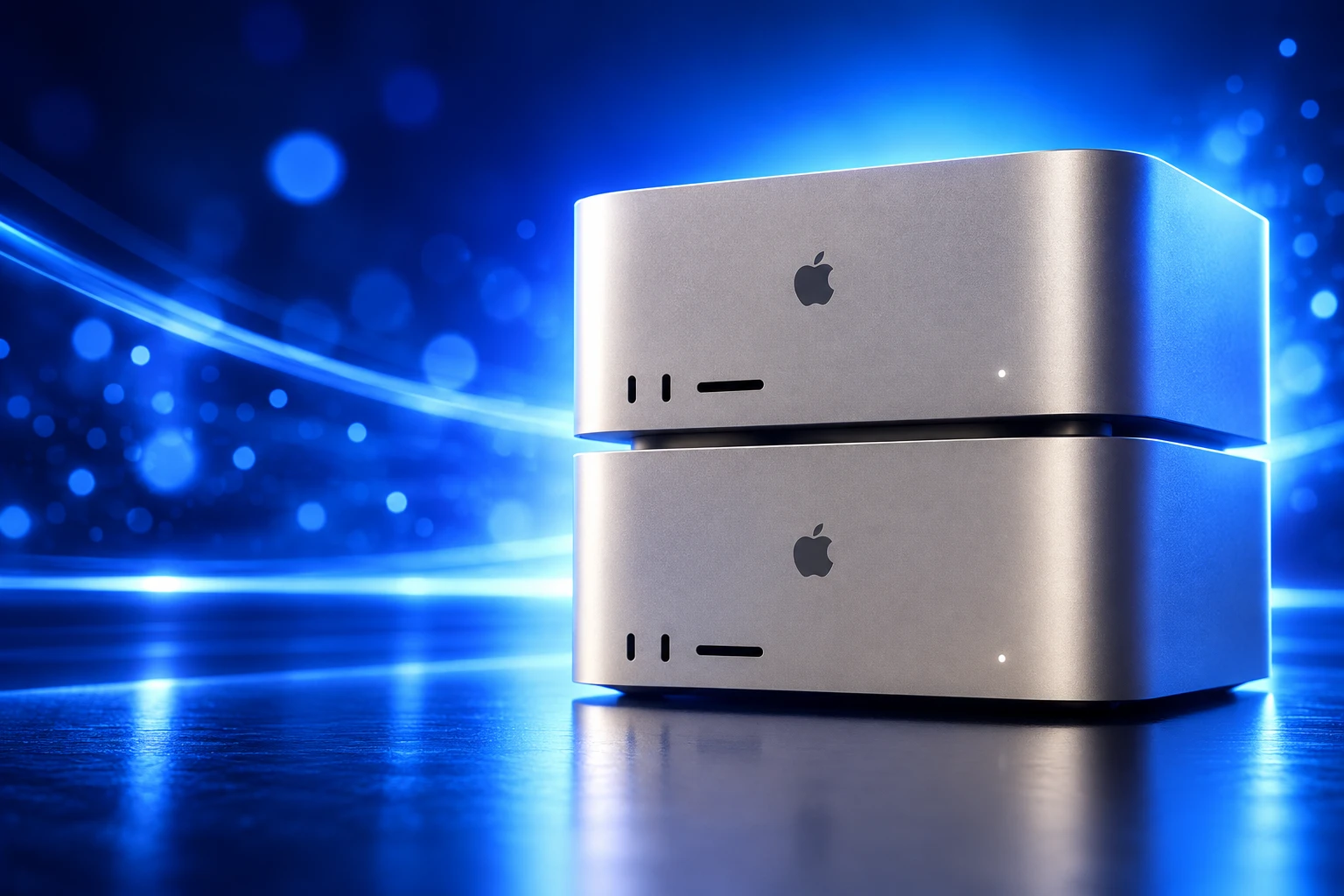
Two Machines Share a Terabyte on the Desk
Meta’s two Apple M5 Ultra Mac Studios line is the part of the launch that will travel. Apple’s unified memory lets each M5 Ultra feed up to 512GB to its GPU. Two machines, Meta says, behave like one box with a terabyte of memory, and the chip’s 1.2TB/s of bandwidth is enough to pull the small slice each token needs.
That is a workstation cluster, not a laptop. Apple’s August 25, 2026 newsroom note prices Mac Studio with M5 Ultra from $5,499 and M5 Max from $2,499. The Ultra can be configured with up to 512GB of unified memory, and Apple said that 512GB configuration would arrive in late October. The base Ultra starts at 96GB, which does not hold this model.
The Hugging Face card is blunt about other hardware. NVFP4 needs at least 700GB of VRAM. BF16 needs 2TB. Meta tested on-device agent jobs in Muse Code, including real iOS edits to Ice Cubes, an open-source Mastodon client, and a full pass through DaVinci Resolve that reviewed footage frame by frame, then cropped the strong moments vertically. It did not publish tokens per second for the dual-Studio setup.
THE MAC STUDIO CLOCK
- August 25, 2026: Apple announces Mac Studio with M5 Max and M5 Ultra and says 512GB unified memory arrives in late October.
- September 22, 2026: Mac Studio units begin reaching customers, stores, and resellers.
- October 15, 2026: Meta posts Muse Spark Open weights and names two M5 Ultra Mac Studios as the desktop path.
- Late October 2026: Apple’s 512GB Ultra configuration is scheduled to ship, the SKU the dual-machine load actually needs.
Apple also says Thunderbolt 5 and RDMA can cluster several Studios, and that four machines can run inference up to 3 times faster than one. That is a rack in all but the furniture. Mark Zuckerberg posted the hardware pairing the day the weights went up, crediting work with Apple CEO John Ternus.
Muse Spark Open — weights releasing today — runs great on new Mac Studios thanks to work with @johnternus and Apple. pic.twitter.com/U2wJNrKBOg
— Mark Zuckerberg (@finkd) October 15, 2026
Amazing to run a model of Muse Spark Open’s caliber and scale this efficiently, right from your desk. Mac Studio keeps pushing the boundaries of on-device AI!
John Ternus, CEO, Apple, on X
The desk in that sentence is a pair of Ultras with the late 512GB boards, plus the MLX adapter for Mac Studio that pulls weights from Hugging Face. Most people who try the model will never own that pair.
The US Label Does Real Work on the Scoreboard
Meta’s headline needs the letters US. On the Artificial Analysis Intelligence Index, Muse Spark Open scores 39 at its xhigh setting. That is first among American open weights in the launch window, 13 points above NVIDIA’s same-day Nemotron 3.5 Super VL at 26. It is also 6 points behind GLM 5.3 at 45, and behind Kimi K3 at 44 and Qwen3.8 at 40, in Meta’s own comparison table.
The wins cluster in tool use. MCP-Atlas, which hits live MCP servers, is 89.2 for Muse Spark Open, ahead of Qwen3.8 at 84.5, GLM 5.3 at 84.2, and Kimi K3 at 82.3. JobBench is 61.8, a 0.4 edge on GLM 5.3 at 61.4. HLE-Diamond with no tools is 26.1, ahead of Kimi K3 at 22.2.
Coding is the hole in a launch that talks about software engineering. On Terminal-Bench 2.1 with the Terminus 2 harness, Muse Spark Open scores 76.4. Kimi K3 is at 85.0, GLM 5.3 at 83.9, and Qwen3.8 at 82.0, an 8.6 point gap to the leader. DeepSWE 1.1 is 60 against 68 for Kimi K3 and 67 for GLM 5.3.
META’S OPEN-WEIGHT SCORECARD
| Benchmark | Muse Spark Open | GLM 5.3 | Kimi K3 | Qwen3.8 |
|---|---|---|---|---|
| AA Intelligence Index | 39 | 45 | 44 | 40 |
| MCP-Atlas | 89.2 | 84.2 | 82.3 | 84.5 |
| JobBench | 61.8 | 61.4 | 54.3 | 52.7 |
| Terminal-Bench 2.1 | 76.4 | 83.9 | 85.0 | 82.0 |
| DeepSWE 1.1 | 60 | 67 | 68 | 57 |
Those rows are Meta’s launch table, run at high reasoning settings. Independent index scoring from Artificial Analysis matches the 39. The pattern is stable across write-ups of the card: the model is a strong tool caller and a mid-pack coder next to the Chinese open weights that already sit on a lot of engineering desks.
That is why the US qualifier is not decoration. Procurement teams that cannot take a Moonshot, Zhipu, or Alibaba model now have a frontier-class American download. Teams that only care about terminal agents still have a reason to keep Kimi K3 or GLM 5.3 in the harness.
What the Muse Model License Allows
This is not Apache. The Muse Model License, dated October 15, 2026 on the Hugging Face card, grants free rights to use, copy, fine-tune, distill, merge, publish, sublicense, and sell the weights. Meta claims no ownership of outputs. Two conditions decide most real deployments, and a usage policy sits on top as Exhibit A.
MUSE MODEL LICENSE CONDITIONS
- The label: Each product or service that uses the model or a derivative must prominently display “Built with Muse Spark Open” in the interface, documentation, website, or settings menu.
- Derivatives: That class includes any model created, trained, modified, distilled, or improved using the software or its outputs, so a student model trained on Spark Open answers carries the same duties.
- The revenue gate: If you or your affiliates sell model access to third parties through an API, and combined gross revenue tops $20 million in any 12 months, you must notify Meta and sign a separate agreement before hosting Spark Open or a derivative that way.
- The carve-outs: Internal use, research, ordinary commercial work that is not model-as-a-service, and using the model inside your own product that is not an API host are exempt from that gate.
- Exhibit A: The usage policy bans, among other things, military and nuclear uses, operation of critical infrastructure, transportation technologies, or heavy machinery, and it says the model is not intended for people under 18.
For a startup that embeds the model in its own app, the practical cost is the badge. For Together, Fireworks, Groq, and any other host already over the line, the practical cost is a side letter with Meta. Affiliate revenue counts, so a small inference shop inside a large group can trip the clause even if the shop itself is tiny.
European companies are not carved out of the grant the way some Llama multimodal terms were. The license names Meta Platforms Ireland Limited as the licensor for the European region and Meta Platforms, Inc. elsewhere.
Cloud Hosts Cover the Machines Most Desks Lack
The freedom story and the distribution story are different products. Meta listed seven API platforms on day one and four clouds for the files. Inference engines named at launch include SGLang, vLLM, TensorRT-LLM, Hugging Face Transformers, Apple MLX, llama.cpp, and Unsloth, with work for AMD, Apple, Intel, and NVIDIA silicon.
SGLang ships custom Helion GPU kernels with the open build. PyTorch says those Helion kernels that autotune across GPUs deliver 1.03 to 3.95 times kernel-level speedups on NVIDIA GB300 against hand-written CUDA and CuTe kernels, and a 3% end-to-end lift on AMD MI350. Helion joined the PyTorch Foundation in April 2026. The same kernels are meant to retune for TPU and other shapes without a second code path.
Intel took the other desktop-shaped route. Its developer account said day-zero support uses four 160GB Intel GPU D-series cards plus Xeon CPUs in air-cooled servers. That is Intel’s stack, not Meta’s 700GB NVFP4 floor, and it is still a server, not a home tower. Unsloth posted Dynamic GGUF files the same afternoon, which is the path people with one loud PC will actually try.
WHERE THE WEIGHTS CAN RUN
- Dual Mac Studio: two M5 Ultra machines at 512GB each, MLX, the launch demo Meta filmed.
- Full precision GPU: 2TB of VRAM for BF16, or at least 700GB for NVFP4, on SGLang, vLLM, or TensorRT-LLM.
- Intel’s day-zero box: four 160GB D-series cards beside Xeon, per Intel.
- Compressed files: Unsloth Dynamic GGUFs through llama.cpp, quality and speed unpublished by Meta.
- Hosted APIs: Baseten, Fireworks AI, Groq, Modal, Nebius, OpenRouter, and Together AI, with no Meta-operated endpoint.
Browser-agent write-ups on the NVFP4 build showed up within days, which matches the MCP-Atlas lead better than the Terminal-Bench gap. If you want a coding agent that lives in a repo all afternoon, the Chinese open weights still have the published edge. If you want a US-licensed tool user that can see a screen, a clip, and a PDF in one context window, this is the download that procurement can actually sign.
The Refusal Rates After Safety Post-Training
Meta says it ran the open build through its Superintelligence Scaling Framework and that the model met the release thresholds. The extra post-training is the reason PyTorch calls it a top open choice for safety, and the published refusal numbers are not close.
On Meta’s internal cyber jailbreak set, with no system-level safeguards, the model refused 99.2% of attacks. Across PolyGuard’s cyber subset, RedCode, and CyberBench 2024, it refused 94.8%. Kimi K3, in the same write-up on the Foundry model card, refused 75.5% and 70.2%. On SecureBio’s BioTIER refusal set it refused over 98% of harmful biology requests, and Meta’s internal single-turn chemistry set cleared 99%. Multi-turn agentic tests stayed over 97% for biology and 98% for chemistry.
The public comparison table makes the same point with a different test. StrongREJECT v2, where a lower score means fewer successful jailbreaks, is 0.5 for Muse Spark Open. The other open models Meta listed sit between 62.9 and 86.4. Teams should expect more declined borderline asks along with fewer broken guardrails. Meta still tells deployers to add their own filters.
The weights are public, the two-Mac demo is a real engineering trick, and the US lead is real inside a narrow fence. Most people who use Muse Spark Open will still call an API, rent a cloud GPU, or load a compressed file, and they will still have to print the required badge on the product.
Frequently Asked Questions
Is Muse Spark Open an open-source model?
No. The files are open weights under the Muse Model License, not an OSI-approved license such as MIT or Apache 2.0. You can run, fine-tune, distill, and redistribute them for free, but you must keep the license and usage policy with copies, show the “Built with Muse Spark Open” mark, and come back to Meta for a side agreement if you sell model-as-a-service and your group’s gross revenue tops $20 million in any 12 months.
Can one Mac Studio run Muse Spark Open?
Not at the quality Meta demonstrated. The launch path is two M5 Ultra Mac Studios so the pair can hold about a terabyte of unified memory. A single Ultra maxes out at 512GB, and Apple’s 512GB option was scheduled for late October 2026. Four Studios clustered over Thunderbolt 5 are Apple’s figure for up to 3 times faster inference, not a way to dodge the second machine.
What sampling settings does Meta recommend?
The model card sets temperature at 1.0, top_p at 1.0, and top_k disabled. Reasoning effort accepts low, medium, high, or xhigh, and the default is xhigh. Meta tells developers to keep high or xhigh for coding and agent jobs, and to drop to low or medium when they want shorter, faster answers. Any other effort string returns an error.
Does Muse Spark Open output images or audio?
No. It accepts text, image, video, and audio, then returns text. The vision and video path runs through a 1.8 billion parameter Perception Encoder with 50 layers, a 1536 hidden size, 16 heads, and 14×14 patches. There is no image generator in this release; media generation at Meta still sits in separate Muse Image systems.
Who is allowed to download the weights?
Hugging Face requires a full legal name, date of birth, and full organisation name, and the form cannot be edited after you send it. The usage policy says Muse Spark Open is not intended for individuals under 18, and it bars uses such as unlicensed medical, legal, or financial practice. Meta Platforms Ireland Limited is the licensor if you are in Europe; Meta Platforms, Inc. is the licensor everywhere else.

MLB and the Union Will Not Extend the Labor Deal

Amazon Found PHP2Shell Probes Four Days Before the Patch

Brent Clears $117 After Gulf Crude Already Came Back

Chipmakers Took the Nasdaq Hit After Meta Burned Cash

Netflix Scored Its 2026 Series as Flops Against Home Runs

Rolex Made Drake the Daytona It Fights Jewelers Over

Treasury’s First Iran Bank Shot Lands on an Ally

Instinct’s $2.5 Billion Raise Still Binds the User as Agent

City’s £125m Enzo Deal Caps a £327m Midfield Rebuild

CSIRTs Inherit Europe’s Missing security.txt Before Article 14
-
 ENTERTAINMENT2 months ago
Rolex Made Drake the Daytona It Fights Jewelers Over
-
 BUSINESS2 months ago
Treasury’s First Iran Bank Shot Lands on an Ally
-
 NEWS2 months ago
Instinct’s $2.5 Billion Raise Still Binds the User as Agent
-
 NEWS2 months ago
City’s £125m Enzo Deal Caps a £327m Midfield Rebuild
-
 NEWS2 months ago
CSIRTs Inherit Europe’s Missing security.txt Before Article 14
-

 BUSINESS2 months ago
Berkshire Anchors Alphabet’s Record Raise With a $10 Billion Check
-
 NEWS2 months ago
Meta’s Teen Settlement Leaves Chat Off the Clock
-

 ENTERTAINMENT2 months ago
Ricky Gervais Wants Alley Cats to Run Until He Dies