
NEWS
Pope Leo XIV’s Lung Cancer Follows a Papal Pattern at Gemelli
Pope Leo XIV has lung cancer after a Gemelli lobectomy, on the same 10th floor that held Francis, with his November Peru trip still posted.

Pope Leo XIV has lung cancer, the Vatican said Tuesday, after surgeons at Rome’s Gemelli Hospital removed the lower lobe of his right lung. The 71-year-old woke up normally, went back to a room on the 10th floor, and asked for dinner.
Last year, as Cardinal Robert Prevost, he had led the rosary in St. Peter’s Square for Pope Francis, then dying of lung disease in the same hospital. On October 13 he was the patient.
Surgeons Took the Lower Lobe and Called It Cancer
Leo arrived at Agostino Gemelli University Hospital at 1:07 p.m., smiled at the crowd, and went in for a planned thoracic operation. Dr. Luigi Carbone, his personal physician, and Professor Stefano Margaritora, Gemelli’s chief thoracic surgeon, signed the bulletin released that night by the Holy See Press Office.
They did not nick out a nodule and wait. To clear the growth, they took the whole lower lobe of his right lung, removed using a video-assisted technique. Tissue checked during the operation confirmed lung adenocarcinoma, matching what pre-operative tests had already suggested.
THE CLOCKS INSIDE THE OPERATING ROOM
| Stage | Time | Result |
|---|---|---|
| Surgery itself | About 90 minutes | Successful, no complications |
| Time in the operating room | About 3 hours | Awoke normally, brief observation |
| Hospital stay | About 1 week | Audiences cancelled through October 20 |
Margaritora led the cut, with Professor Elisa Meacci and Drs. Maria Teresa Congedo and Leonardo Petracca Ciavarella. Anesthesia was run by Professor Massimo Antonelli with Drs. Giovanni Punzo and Giuseppe Bello. Post-operation tests on the removed tissue were still ahead, and the press office said a further note would follow Wednesday morning.
To ensure a radical resection, the lower lobe of the right lung was removed using a video-assisted technique. An intraoperative histological examination confirmed the diagnosis of lung adenocarcinoma, as suspected from the preoperative examinations.
Dr. Luigi Carbone and Professor Stefano Margaritora, Holy See Press Office statement, October 13, 2026
A radical cut around a growth the pope had described as small is how thoracic teams try to finish the job in one operation. The word cancer sounds like a crisis. The operation they described is the standard attempt to stop one.
He Told the Square About the Knife Himself
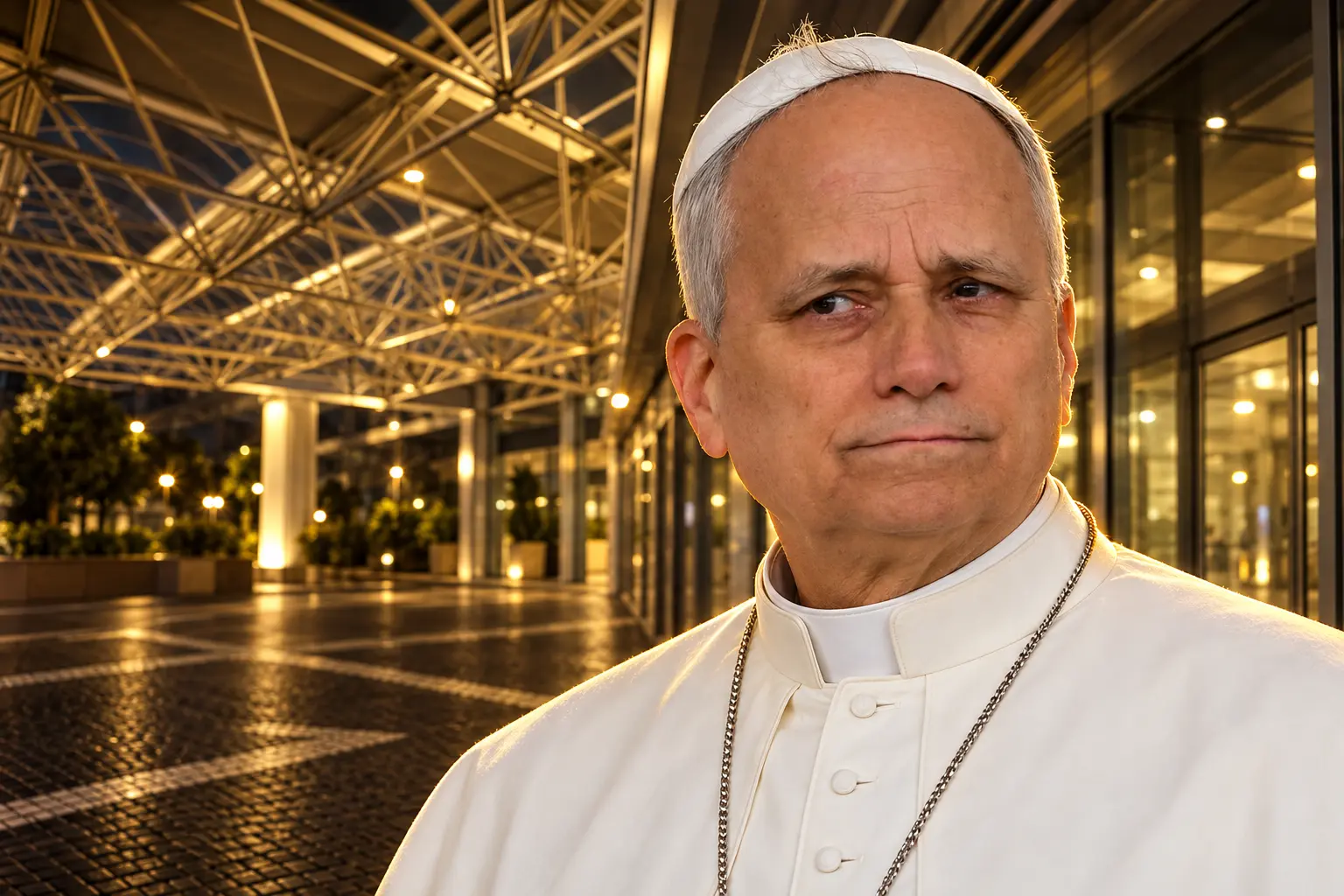
Leo did not let the press office break the news. At the Angelus on Sunday, October 11, he told the crowd in St. Peter’s Square that routine checks had found a small, localized nodule, caught early, and that he would have it taken out. Matteo Bruni, director of the Holy See Press Office, later said the find came from ordinary exams, not a collapse.
The official account posted the same words that afternoon.
Dear friends, during some recent medical examinations, the doctors found a small, localized nodule in my lung. It was detected at a very early stage and is well-localized. The doctors believe that it is best to intervene, so, following their advice, I have decided to undergo…
— Pope Leo XIV (@Pontifex) October 11, 2026
“Dear friends, during some recent medical examinations, the doctors found a small, localized nodule in my lung. It was detected at a very early stage and is well-localized. The doctors believe that it is best to intervene, so, following their advice, I have decided to undergo surgery to remove it,” he wrote. “I thank you for your spiritual closeness and entrust myself to your prayers.”
He kept his Monday audiences, then left the Vatican just before 1 p.m. on Tuesday. John Paul II had used the Angelus in 1992 to tell the faithful he was going to Gemelli for tests. Leo reached for that same habit: say it in public, then go.
People who have had lobes removed talk about walking and working again, not about last rites. Taking more lung than a wedge is still major surgery. It is also the version of this disease that is treated as a problem with a date on the calendar.
The 10th Floor Has Seen This Before
Gemelli is where modern popes go when the Vatican’s own clinic is not enough. John Paul II nicknamed it Vatican III, after St. Peter’s and Castel Gandolfo. A statue of him stands in front of the building, and the hospital chapel where Rome prayed on Tuesday night bears his name.
Leo is the first pope from the United States, an Augustinian, a dual citizen of the United States and Peru, and the man Francis put in charge of bishop appointments. Cardinals elected him the 267th pope on May 8, 2025, 17 months before this operation. The floor he woke up on is not a new address for the papacy.
A PAPAL PATH TO THE SAME HOSPITAL
- 1957: A 21-year-old Jorge Mario Bergoglio has part of his right lung removed in Buenos Aires after cysts form on the upper lobe.
- May 13, 1981: John Paul II is rushed to Gemelli after the shooting in St. Peter’s Square, beginning the hospital’s life as a papal ward.
- February 14, 2025: Francis returns to Gemelli with bronchitis that becomes pneumonia in both lungs and stays 38 days, through March 23.
- March 3, 2025: Cardinal Robert Prevost leads the rosary in St. Peter’s Square for Francis, still in that hospital.
- April 21, 2025: Francis dies at 88 in the Domus Sanctae Marthae, of a stroke and irreversible heart failure, after that long respiratory illness.
- May 8, 2025: Prevost is elected and takes the name Leo XIV.
- October 11, 2026: Leo tells the Angelus crowd about a nodule in his lung.
- October 13, 2026: Surgeons remove his right lower lobe and confirm adenocarcinoma on Gemelli’s 10th floor.
Francis lost part of the same lung as a young man and spent his last winter fighting infection in the same building. Leo’s case, as described so far, is a found nodule and a planned cut, not a 38-day emergency. The building does not always know the difference. Cardinal Baldassare Reina, vicar general of Rome, led a rosary in the St. John Paul II Chapel while the operation ran, and asked parishes across the diocese to pray at the same hour.
A 12-Day South America Trip Still Leaves on November 6
The Holy See has not taken down the Uruguay, Argentina and Peru itinerary. If that timetable holds, he leaves Rome/Fiumicino at 7 a.m. on November 6, 24 days after the lobectomy, and lands back at 10:25 a.m. on November 17. The posted trip is 12 days, with nine public Masses and 14 air legs, including two helicopter hops in northern Peru.
THREE COUNTRIES STILL ON THE PAGE
- Uruguay, November 6-8: Welcome in Montevideo, a Mass in Paysandú, a vigil at Centenary Stadium, then Florida and a flight to Buenos Aires.
- Argentina, November 8-11: Buenos Aires, a disability home in Claypole, Córdoba, a prison visit, and Mass at the Basilica of Our Lady of Luján.
- Peru, November 11-16: Lima, then Chiclayo, the diocese he led as bishop, with Mass near Pimentel, a helicopter Mass in Santa Cruz de Succhabamba, and a long Sunday through Cusco and Pucallpa in the Amazon.
Chiclayo is the personal stop. He was bishop there, took Peruvian citizenship in 2015, and is going home as pope with a full outdoor Mass on the Pampas de Pimentel. Cusco and the Amazon day on November 15 stack altitude, heat, and three flights onto a man 33 days out from having a lobe taken. The Vatican has not said the dates will move. Leaving them up is a prognosis written as airport slots.
What Early Lung Adenocarcinoma Usually Means
Adenocarcinoma is the most common form of non-small cell lung cancer, the group that makes up about 80 to 85 percent of lung cancers. The American Cancer Society says this subtype starts in cells that make mucus along the lung surface. It is the type most often found in people who have never smoked, and it is also common in people who did.
The Vatican has not published a stage, lymph-node status, or any plan for chemotherapy or radiation. What it has published is a small, localized nodule, suspected on scans, then treated with a complete lobectomy. For non-small cell tumors still confined to the lung, the Society’s SEER figures show a 67 percent five-year relative survival among people diagnosed from 2015 to 2021. That figure is a population average, not a forecast for one 71-year-old pope, and it covers a wide mix of cases.
WHAT WE KNOW
- The diagnosis: Intraoperative histology confirmed lung adenocarcinoma, as pre-operative tests had suggested.
- The operation: The entire right lower lobe was taken by video-assisted surgery, with no complications reported.
- The early claim: Leo said on October 11 the nodule was found at a very early stage and was well localized.
- The next week: He is expected to remain in hospital about a week, with public audiences cancelled through October 20.
WHAT IS UNCONFIRMED
- The stage: No TNM stage, tumor size, or lymph-node report has been released.
- Further treatment: The Holy See has not said whether chemotherapy, radiation, or targeted drugs will follow.
- The November trip: The published dates have not been pulled, and they have not been freshly reconfirmed since the cancer finding.
Video-assisted lobectomy is now the usual approach for early tumors that can be reached that way, because it avoids spreading the ribs and shortens the hospital stay. A week on the 10th floor fits that recovery, not an open thoracotomy. Missing from the bulletin is the pathology that tells doctors whether surgery was enough.
Cardinal Tagle Says the Mass While Leo Recovers
The Prefecture of the Papal Household cancelled all of the pope’s audiences through October 20. That includes the Mass in St. Peter’s Square on Wednesday, October 14, which was to close a gathering of Eastern Church heads, bishops’ conference presidents, married couples, and experts. Cardinal Luis Antonio Tagle, pro-prefect of the Dicastery for Evangelization and the new dean of the College of Cardinals, was asked to preside in his place.
Leo held every scheduled audience on Monday, the day before the operation, while messages arrived from churches and governments. Ordinary Vatican work does not freeze because the pope is on a ward. The public calendar does. From the 10th floor, the next test is not a conclave rumor. It is whether a man 24 days after a lobectomy can still board a plane for Montevideo with nine Masses ahead of him.
That night he asked for dinner and sat with his secretaries and other Vatican staff, Bruni told reporters. The public timetable still has him leaving Fiumicino at 7 a.m. on November 6.
Disclaimer: This article is news reporting on a Vatican medical bulletin and related public records, and it is for information only. It is not medical advice, a diagnosis, or a prediction of Pope Leo XIV’s personal outcome, and it does not tell any reader how to treat lung cancer. Anyone facing a lung nodule, adenocarcinoma, or surgery should consult a qualified physician or oncologist about their own case. Figures, hospital plans, and travel dates reflect the Holy See and medical sources cited here and may change as further tests and bulletins appear.

MLB and the Union Will Not Extend the Labor Deal

Amazon Found PHP2Shell Probes Four Days Before the Patch

Brent Clears $117 After Gulf Crude Already Came Back

Chipmakers Took the Nasdaq Hit After Meta Burned Cash

Netflix Scored Its 2026 Series as Flops Against Home Runs

Rolex Made Drake the Daytona It Fights Jewelers Over

Treasury’s First Iran Bank Shot Lands on an Ally

Instinct’s $2.5 Billion Raise Still Binds the User as Agent

City’s £125m Enzo Deal Caps a £327m Midfield Rebuild

CSIRTs Inherit Europe’s Missing security.txt Before Article 14
-
 ENTERTAINMENT2 months ago
Rolex Made Drake the Daytona It Fights Jewelers Over
-
 BUSINESS2 months ago
Treasury’s First Iran Bank Shot Lands on an Ally
-
 NEWS2 months ago
Instinct’s $2.5 Billion Raise Still Binds the User as Agent
-
 NEWS2 months ago
City’s £125m Enzo Deal Caps a £327m Midfield Rebuild
-
 NEWS2 months ago
CSIRTs Inherit Europe’s Missing security.txt Before Article 14
-

 BUSINESS2 months ago
Berkshire Anchors Alphabet’s Record Raise With a $10 Billion Check
-

 NEWS2 months ago
Meta’s Teen Settlement Leaves Chat Off the Clock
-

 ENTERTAINMENT2 months ago
Ricky Gervais Wants Alley Cats to Run Until He Dies