
BUSINESS
Warsh Holds Rates as the AI Buildout Tests the Fed
The Fed held rates at 3.75% to 4% on a 10-2 vote as Warsh bet higher costs will slow AI data-center borrowing.

The Federal Reserve left its benchmark rate in a 3.75% to 4% range on Oct. 28, a 10-2 vote that kept pressure on the one borrower class still expanding. Chairman Kevin Warsh said last month’s increase is starting to reach firms that borrow to build data centers, while inflation is still too high.
Governor Lisa Cook and Cleveland Fed President Beth Hammack wanted a quarter-point hike the same afternoon. The next scheduled vote is Dec. 8-9, six weeks after a meeting that sat six days before the Nov. 3 midterms.
The Fed Leaves the Funds Rate at 3.75% to 4%
The policy statement, approved on a 10-2 vote to hold rates, said economic activity is expanding at a strong pace, productivity growth is strong, and capital investment is robust. Job gains have kept pace with the workforce, and the unemployment rate has changed little. Inflation remains elevated. Officials said the accumulation of more information will help them set policy for a timely return to the 2% goal.
That range was set in September, when the committee raised the funds rate by a quarter point for the first time since 2023, in a unanimous vote. Cook and Hammack said they preferred to lift the range by 1/4 percentage point on Oct. 28, which would have put it at 4.00% to 4.25%.
Warsh faced reporters after the two-day meeting. The Fed posted the session in full.
THE PATH FROM THE SEPTEMBER HIKE
- September 16, 2026: The committee raises the funds rate by a quarter point to 3.75% to 4%, the first increase since 2023, with all 12 voters in favor.
- October 8, 2026: The average 30-year mortgage rate hits 7.4%, the highest since November 2023, Freddie Mac reports.
- October 28, 2026: The committee holds that range on a 10-2 vote, with Cook and Hammack preferring another quarter point.
- December 8-9, 2026: The next scheduled meeting at which officials vote on the funds rate.
Warsh told reporters the committee had just come out of “a heck of a family fight.” He also said he was honored to chair the group, five months into the job, and that the coming stretch would be “information-rich” and would have nothing to do with politics.
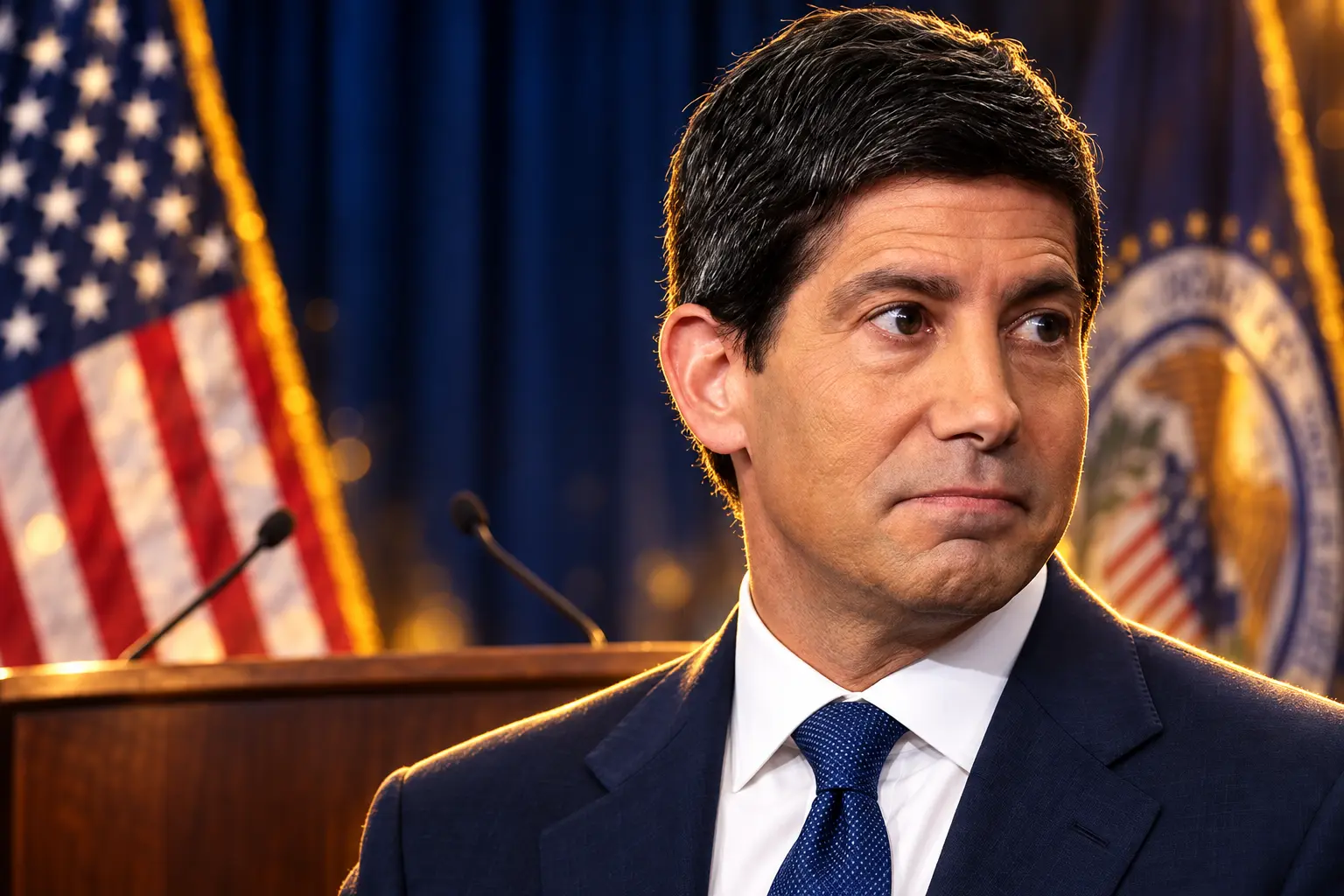
Warsh Bets Higher Rates Will Reach Data-Center Borrowing
The argument that did not fit in the statement is who still has cheap room to spend. High-tech investment is leading a surge in capital spending that Warsh called a historically high share of GDP, and large technology firms have been turning to bond and stock markets to fund data centers they once paid for in cash. If those borrowers start to feel the cost of money, the September hike can work without another move in October.
In his opening remarks he pointed to first-half growth revised to 2.4% from an earlier 1.8% estimate, and said the third quarter appeared even faster, with consumer spending likely running above 3% and business investment likely rising at about a double-digit pace. High-tech is leading that acceleration, he said, and spending has been broadening into other categories.
Interest rates affect, directly or indirectly, almost everything. You see market participants that are discriminating between the kinds of investments they want to make. You’ve seen credit spreads for certain assets widen out, gap out.
Kevin Warsh, Federal Reserve chairman, Oct. 28 news conference
Credit conditions have tightened for some businesses and households since September, he said, “much as we would expect.” He also said he was unwilling and unable to call overall financial conditions tight. Market rates had already moved before the Fed’s own September increase, which is why the hold can look like patience even while the cost of a mortgage, a car loan, or a credit-card balance is higher than it was in the spring.
The hidden ledger is simple. Households reprice quickly when bond yields jump. A hyperscaler with a multiyear build can still sign for chips, power, and land unless lenders get choosier. Warsh is treating that choosiness as the test of whether the last hike was enough.
Homebuyers Are Already Paying a Three-Year High
The people who did not need a second Fed increase to feel tighter money are already in the housing market. Freddie Mac’s average 30-year rate reached a three-year high of 7.4% in early October, the first print at that level since November 2023, before slipping a bit. Oxford Economics, a consulting firm, estimates that higher mortgage rates have made buying a home unaffordable for 5 million more Americans since the start of the year.
WHAT HOUSEHOLDS ALREADY PAY
- 30-year mortgage: The average rate hit 7.4% in early October, a three-year high on Freddie Mac’s survey, then eased slightly.
- Homebuying reach: Oxford Economics puts the extra households priced out of a purchase since January at 5 million.
- Other credit: Auto loans and credit-card balances reprice with market rates even when the funds rate is on hold.
- Jobs backdrop: Unemployment was 4.2% in September, and payrolls rose by 29,000, so the labor market has not cracked in a way that would force a cut.
That mix is why a hold can still hurt. The Fed’s own rate did not move on Oct. 28, but the price of a house payment was set in the bond market weeks earlier. Over time, official hikes still feed into mortgages, car loans, and revolving credit, which adds to the sense that homes and cars are getting dearer even when the committee stays put.
Lisa Cook Cast Her First Rate Dissent
Cook’s no vote is her first dissent on rates since President Joe Biden appointed her to the board in 2022. Hammack joined her in preferring a quarter-point increase. It is the first time a governor and a reserve-bank president have dissented on the same side since October 1992, when Governor Lawrence Lindsey and Cleveland Fed President Jerry Jordan both wanted easier policy, the opposite of this week’s split.
Cook is also the official President Donald Trump has tried to remove. The Supreme Court on June 29, 2026, denied a stay in a 5-4 decision and left her in office while litigation continues, after the White House cited mortgage-fraud allegations that she has denied. Trump renewed the effort in September by standing up a committee on those claims. Cook’s lawyers told the Justice Department in late October that the referrals cherry-picked her 2021 loan files.
The midterms are on Nov. 3. Asked whether they factored into the hold, Warsh said politics played no role in the decision. He had spent two days with colleagues upstairs, he said, and did not hear an utterance about politics, elections, or what was happening in the next week.
Trump appointed Warsh and has aimed his anger at the rate-setting committee rather than at the chair, including after the September hike. A governor he has tried to fire then voted to raise rates further, which is a poor fit for any claim that the hold was a gift to the White House. The split is over timing. Warsh said the overwhelming consensus is that what the committee has already done “is starting to work some.” Cook and Hammack wanted the next increment on the table now.
Why Consumer Prices Are Still Running at 3.7%
The Bureau of Labor Statistics said the consumer price index rose 0.6% in September after a 0.4% increase in August, putting the 12-month rate at 3.7%, up from 3.4% in August. Core prices, which exclude food and energy, rose 0.3% on the month and 2.6% on the year, after 2.4% in August. Gasoline jumped 9.1% in September and accounted for more than half of the monthly rise in the all-items index. Energy is up 20.4% over the year, gasoline 34.2%, and food 2.5%.
Warsh said Americans are still dealing with inflation that has been running above the committee’s objective for close to 6 years, and that energy and related prices have moved higher again in recent weeks. The job, he said, is to stop relative price changes in some sectors from broadening across the economy, and to keep inflation expectations anchored. Near-term expectations have risen. He said longer-term measures still show households and businesses expect the Fed to deliver 2%.
INFLATION READINGS IN HAND
| Gauge | Latest reading | Period |
|---|---|---|
| CPI, all items | 0.6% m/m, 3.7% y/y | September |
| CPI, less food and energy | 0.3% m/m, 2.6% y/y | September |
| Energy (CPI) | 5.2% m/m, 20.4% y/y | September |
| Gasoline (CPI) | 9.1% m/m, 34.2% y/y | September |
| PCE price index | 0.3% m/m, 3.4% y/y | August |
| PCE, less food and energy | 0.2% m/m, 3.0% y/y | August |
The Fed’s preferred gauge still lags the CPI print. The Bureau of Economic Analysis had August PCE prices up 3.4% from a year earlier, with core PCE at 3.0%, and it was due to publish September PCE and the first look at third-quarter GDP on Oct. 29. Forecasts before that release clustered near 3.6% for headline PCE and 3.1% for core. BEA’s last official growth figure is 2.2% for the second quarter, after 2.5% in the first.
Payrolls rose 29,000 in September, and the unemployment rate ticked up to 4.2% from 4.1% as more people entered the labor force. Warsh said the jobless rate is lower than a year ago, payroll growth is above last year’s pace, and the four-week average of unemployment-insurance claims is at the lowest level in generations. Growth is not the constraint. Prices are.
The Bank of Canada Did Not Wait
Ottawa moved the same day Washington paused. The Bank of Canada raised its overnight rate up to 2.5%, with the Bank Rate at 2.75% and the deposit rate at 2.45%, its first increase since July 2023. Governing Council said it wanted to reduce the risk that high energy prices spread into other goods and services, and it left the door open to another move while promising to proceed carefully.
Canada’s statement named the same U.S. mix Warsh is watching: robust American growth, consumer spending, and AI-related investment, against persistently elevated oil prices. Canadian CPI has been around 3% since April and is expected to rise to about 3.5% by the end of 2026, then average 3% in 2027 and return near 2% by the middle of 2028. Growth in Canada is projected at 1% this year. The unemployment rate has been around 6.5% for several months. The Bank of Canada’s next rate date is Dec. 9, the day the Fed’s December meeting ends.
RATE DECISIONS ON THE CALENDAR
| Central bank | Date | Action | Policy rate |
|---|---|---|---|
| Federal Reserve | Oct. 28 | Hold, 10-2 | 3.75% to 4% |
| Bank of Canada | Oct. 28 | +0.25 point | 2.5% overnight |
| European Central Bank | Oct. 29 | Scheduled | Decision due that day |
| Bank of Japan | Oct. 30 | Scheduled | Decision due that day |
Energy is doing work that a funds-rate hold cannot undo in a single meeting. The Iran war, which began in late February, is in its eighth month on the Bank of Canada’s count, and gasoline’s 9.1% jump in the U.S. CPI is the household version of that shock. Warsh’s bet is that rate policy can still stop those relative price changes from spreading. Canada’s bet, the same day, was not to wait.
Next Fall, One Meeting Will Skip a Rate Vote
Buried under the hold was a calendar change that will outlast December. Warsh said the committee will still meet eight times a year, which he called the right number, but in 2027 one of those gatherings will focus exclusively on broad monetary policy strategy, with neither a vote on the federal funds rate nor a policy statement anticipated. In 2028 he expects two strategy meetings and six for setting policy.
THE NEW FOMC CALENDAR
- 2026 remainder: The next regular rate vote is still Dec. 8-9, after an October hold and a September hike.
- 2027: Eight meetings, seven with a funds-rate vote and a statement, one reserved for strategy and no rate decision.
- 2028: Two strategy meetings and six policy-setting meetings, unless officials call an emergency session.
- Warsh’s reason: Near-term data still get regular, information-rich meetings, while the committee reserves time for longer-horizon questions.
Fewer scheduled votes will make each remaining decision louder, including the one already on the books for Dec. 8-9. By then officials will have September PCE, the first GDP print for the July-September quarter, and the October CPI on Nov. 10. Warsh refused to say whether the current range is already the right one. He said the information in that interval will help the committee decide where it wants policy to be, and that the job, at every turn, is to get monetary policy right.
The people who will feel that next vote first are the same two groups that sat in the background on Oct. 28: firms still borrowing to pour concrete and power for data centers, and households already writing checks on a 7.4% mortgage. Cook and Hammack wanted that squeeze tightened immediately. The majority chose six more weeks of evidence, and a chair who says interest rates get in the cracks.
Disclaimer: This article is news reporting on a Federal Reserve policy decision and related economic data, and it is for information only. It is not investment, financial, tax, or legal advice, and it does not recommend any loan, bond, deposit, or other rate-sensitive product. Readers should consult a qualified financial adviser before acting on changes in interest rates or inflation data. Policy settings, forecasts, and published figures reflect official releases and public remarks on the dates named in the piece and can change at later meetings or data prints.

Nvidia Stops China H200 Sales as Cloud Licenses Close

Icepick Turns 41,000 DHS Logins Into a Command Map

Warsh Holds Rates as the AI Buildout Tests the Fed

Nicki Minaj Fights a Demand for Staff Texts

Eric Bauza Dies at 46 and Warner Must Recast Bugs

Rolex Made Drake the Daytona It Fights Jewelers Over

Treasury’s First Iran Bank Shot Lands on an Ally

Instinct’s $2.5 Billion Raise Still Binds the User as Agent

City’s £125m Enzo Deal Caps a £327m Midfield Rebuild

Meta’s Teen Settlement Leaves Chat Off the Clock
-
 ENTERTAINMENT3 months ago
Rolex Made Drake the Daytona It Fights Jewelers Over
-
 BUSINESS3 months ago
Treasury’s First Iran Bank Shot Lands on an Ally
-
 NEWS3 months ago
Instinct’s $2.5 Billion Raise Still Binds the User as Agent
-
 NEWS3 months ago
City’s £125m Enzo Deal Caps a £327m Midfield Rebuild
-

 ENTERTAINMENT3 months ago
Ricky Gervais Wants Alley Cats to Run Until He Dies
-
 NEWS3 months ago
Meta’s Teen Settlement Leaves Chat Off the Clock
-

 NEWS3 months ago
CSIRTs Inherit Europe’s Missing security.txt Before Article 14
-

 BUSINESS3 months ago
Berkshire Anchors Alphabet’s Record Raise With a $10 Billion Check