
BUSINESS
Robinhood Engineers Face Fraud Charges Over Hyperliquid Perps
Two Robinhood listing engineers face commodities and wire fraud counts for alleged Hyperliquid perps trades placed off a private Slack listing channel.

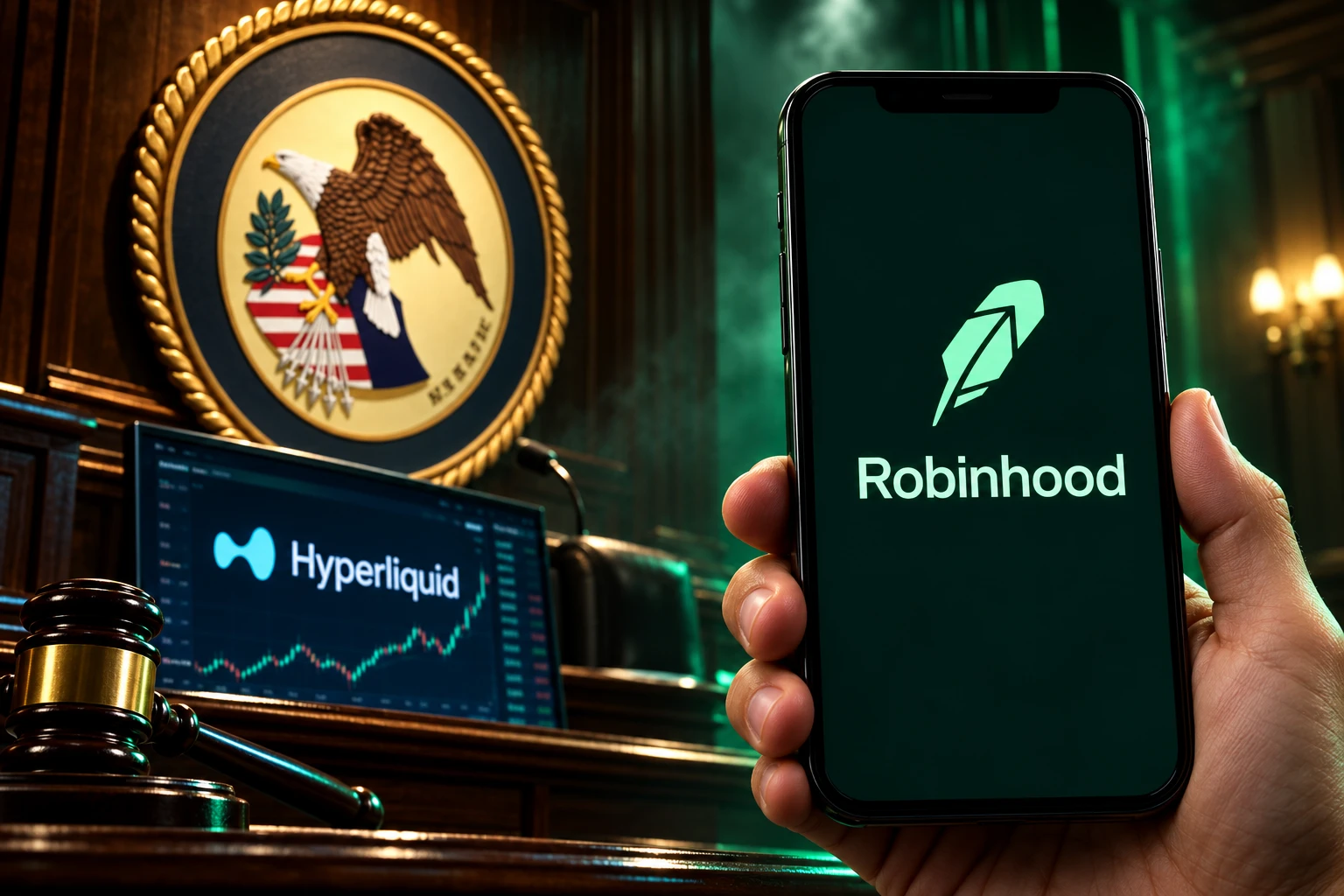
Manhattan prosecutors charged two Robinhood engineers on September 15, 2026, with commodities fraud and wire fraud over Hyperliquid perpetual trades. Complaints unsealed in the Southern District of New York say Hefu Chai, 36, of Menlo Park, California, and Huaisong Xiang, 30, of Jersey City, New Jersey, also known as Jerry Xiang, each made more than $50,000 by buying token perps before Robinhood Crypto listed those coins.
U.S. Attorney Jamie McDonald said the pair used listing news they were paid to keep quiet, then took the other side of traders on a decentralized derivatives venue. Hyperliquid is named as the market, not as a defendant, and both men are presumed innocent.
Robinhood Put Listing Dates in a Locked Slack Channel
FBI Special Agent Joseph Kim swore out both complaints. Chai worked at Robinhood from about 2021 to May 2026 as a technical lead on new digital-asset listings. Xiang worked from about 2024 to September 2026 as a software engineer on the same process, based out of the Manhattan office.
Robinhood Crypto does not list every coin, and the complaint treats the calendar as commercial property. A premature leak, Kim wrote, lets rivals copy a listing, pulls volume off Robinhood before the post, and can dent the brand if the leak looks selective. Both men were designated Coin Aware Individuals, a small group that could see dates other staff could not.
That group sat in a confidential Slack channel for coin listings whose own description called it a channel for planning, readiness, and launch. Messages in that room included posts from Manhattan staff, which is how the case sits in New York even though Chai lived in California. A digital asset can go live on Robinhood Crypto up to one hour before the public listing post, and Kim said price often moves in that gap.
THE COIN AWARE TRADING RULES
- The policy: Robinhood barred staff from trading securities, crypto, event contracts, or other instruments while holding material nonpublic information from the job.
- The halt: Coin Aware Individuals were strictly prohibited from trading on Robinhood or any other platform before a listing or delisting post and during the 24 hours after it.
- The 2024 email: In November 2024 both men were told it was imperative to keep listing information confidential and not buy or sell a given asset based on that nonpublic information.
- The T-1 ping: In May 2025 a Manhattan member of the channel wrote that the team was T-1 from launch and that the 24-hour trading halt for employees would be in place.
The government’s theory is simple. They were warned in writing, they still had the dates, and they traded anyway on a venue Robinhood did not control.
Chai’s Wallets Followed the Listing Clock
Kim tied Chai to three Hyperliquid wallets through a cryptocurrency exchange account opened in Chai’s name in December 2017. Between November 13, 2025, and March 15, 2026, that named account received about $100,000 from one of the wallets, a flow the agent uses to show control, not as the claimed trading profit.
On at least ten occasions between 2025 and January 2026, the complaint says, Chai opened long perps on Hyperliquid after Slack gave him a listing date and before Robinhood posted it. Several times he flattened after the coin was already tradable on Robinhood Crypto but still before the public post, which matches that one-hour go-live window.
CHAI’S ALLEGED LISTING-WEEK LONGS
| Slack date | Listing day | Tokens | Wallet used |
|---|---|---|---|
| May 21, 2025 | May 22, 2025 | MEW, MOODENG | Wallet-0xAf1 |
| October 9, 2025 | October 16, 2025 | ASTER, XPL | Wallet-0xF01 |
| October 16, 2025 | October 23, 2025 | HYPE | Wallet-0xF01 |
| October 31, 2025 | November 6, 2025 | ENA | Wallet-0xF01 |
| December 1, 2025 | December 4, 2025 | AERO | Wallet-0x548 |
| December 5, 2025 | December 11, 2025 | SYRUP | Wallet-0x548 |
| December 15, 2025 | December 18, 2025 | LDO | Wallet-0x548 |
| January 9, 2026 | January 13, 2026 | DOT | Wallet-0x548 |
| January 9, 2026 | January 15, 2026 | LIT | Wallet-0x548 |
Those nine example days cover meme coins, exchange tokens including Hyperliquid’s own HYPE, and larger names such as DOT. Kim says Chai earned a profit on the closes he describes, and that the full set of trades produced more than $50,000.
Xiang’s complaint starts with a cleaner one-day tape. On March 10, 2025, Slack said Robinhood was considering POPCAT for March 13. On March 12 he sent about 18 ether, then worth about $34,000, to Hyperliquid wallet 0x8081. Later that day Slack confirmed a 9:00 a.m. Eastern listing. On March 13 he went long POPCAT perps, Robinhood posted the listing, and he closed after the coin was live but before the public post, at a profit, Kim says.
THE POPCAT WEEK IN XIANG’S COMPLAINT
- March 10, 2025: Slack says Robinhood is considering listing POPCAT on March 13.
- March 12, 2025: Xiang sends about 18 ether, about $34,000, to Wallet-0x8081, then Slack confirms a 9:00 a.m. listing.
- March 13, 2025: Wallet-0x8081 opens long POPCAT perps, the listing goes live, and the position is closed before the public post, at a profit, the complaint says.
Kim adds at least ten other occasions in that same wallet from May 2025 through February 2026, including MEW and MOODENG on May 22, 2025, ONDO on August 7, 2025, and RENDER on January 29, 2026. After the POPCAT session, a person who appears to live outside the United States sent about $33,395 in USDC into the wallet; State Department records, Kim wrote, show that person listed Xiang as a visa contact. Xiang’s alleged profit is also more than $50,000.
Why the Charges Cite the Commodity Exchange Act
They did not buy the coins on Robinhood. They bought perpetual futures, contracts with no expiry that track a token through funding payments and can be run on margin. That product choice is why Count One is commodities fraud under 7 U.S.C. §§ 9(1) and 13(a)(5) and CFTC Rule 180.1, not a securities-fraud count on the tokens themselves.
McDonald put the point in the charging statement. He said insiders cannot evade securities and commodities laws by shifting the bet into perpetual futures, tokenized securities, or similar instruments.
Misappropriating confidential information to trade in the derivatives markets for personal benefit is illegal. That is exactly what we allege Hefu Chai and Huaisong Xiang have done. Today’s charges make clear that corporate insiders cannot evade the securities and commodities laws by trading based on misappropriated information in derivatives like perpetual futures, tokenized securities, or other similar financial instruments.
Jamie McDonald, U.S. Attorney, Southern District of New York
Wire fraud is the second count. Kim says they took confidential business information subject to a duty, then used it to take money from Hyperliquid counterparties through interstate wires. Rule 180.1 is the CFTC’s anti-fraud rule for swaps, commodity contracts, and futures. The complaints treat Hyperliquid perps as sitting in that bucket even though, Kim notes, Hyperliquid does not have CFTC approval to run a futures market.
That charging choice landed after the CFTC, on May 29, 2026, approved KalshiEX’s bitcoin perpetual as a futures contract on a registered designated contract market. A same-week policy statement told firms to bring other perpetual designs in for review. Law-firm analysis of those actions described them as the first affirmative U.S. framework for crypto perpetuals, and as a shift from years of treating similar contracts as swaps in enforcement work.
Kalshi is a registered exchange. Hyperliquid is not. The criminal case does not wait for Hyperliquid to register. It says two U.S. employees with a duty to Robinhood still committed commodities fraud when they traded the product on an unregistered chain venue.
Coinbase’s 2022 Case Used Spot Tokens, Not Perps
SDNY has run this fact pattern before, with a different instrument. On July 21, 2022, Manhattan prosecutors charged former Coinbase product manager Ishan Wahi with tipping his brother Nikhil Wahi and friend Sameer Ramani about listing dates. Those trades were spot tokens in Ethereum wallets, on at least 14 occasions from June 2021 through April 2022, covering at least 25 assets, with realized and unrealized gains of at least $1.5 million, the 2022 charging papers say. The counts were wire fraud and conspiracy, not the Commodity Exchange Act.
TWO LISTING-LEAK CASES, TWO INSTRUMENTS
| Coinbase, 2022 | Robinhood, 2026 | |
|---|---|---|
| Inside role | Product manager on listings | Engineers on listings |
| Channel | Private messaging room | Coin Aware Slack |
| Market used | Spot tokens | Hyperliquid perpetual futures |
| Alleged haul | At least $1.5 million, group | More than $50,000 each |
| Lead statute | Wire fraud | Commodity Exchange Act plus wire fraud |
The dollar gap is the tell. Wahi’s group cleared seven figures in spot. Chai and Xiang, as charged, cleared five figures each in perps and still drew a commodities count that can mean 10 years on its own. The smaller book is doing more legal work. It lets prosecutors say a listing leak is still fraud when the trade is a derivative, on a DEX, with no token in the wallet.
A U.S. IP Block Did Not Hide Named Exchange Accounts
Hyperliquid’s site geofences United States IP addresses. Kim writes that a virtual private network can bypass that front door, which is a statement about how the site works, not a claim that either man used one. The complaints never need that claim, because the wallets did not stay anonymous.
Chai’s three wallets sent money to, and took money from, an exchange account in his own name. Xiang funded Wallet-0x8081 from an exchange account registered in his name on July 23, 2022. Once those rails exist, a geofenced interface is just a website. The edge was the Slack date, not the chain’s privacy.
Hyperliquid is a large market for that kind of bet. A Hyperliquid Policy Center comment letter in August 2026 said Hyperliquid markets did nearly $3 trillion in 2025 notional volume and more than $1.5 trillion in 2026 through the date of that letter, with the interface still blocked for U.S. users. Volume on that scale is why a Robinhood listing can move a perp, and why a long placed the morning of a post can show a profit even if the trader never buys the coin on Robinhood.
A Robinhood spokesperson said the firm has zero tolerance for insider trading, that it has policies for new crypto listings, and that it investigated at once, reported the matter to law enforcement and regulators, and will keep cooperating. McDonald thanked Robinhood in the charging release. Robert Stahl, a lawyer for Xiang, said his client denies the charges and will defend himself in court. Chai did not issue a public reply with the complaints.
Two Counts and a Manhattan Task Force
Each complaint is two counts. Commodities fraud under the Commodity Exchange Act carries a maximum of 10 years. Wire fraud under 18 U.S.C. §§ 1343 and 2 carries a maximum of 20 years. Those figures are statutory caps. The release says a judge would set any sentence, and that the papers are accusations.
THE CHARGING SNAPSHOT
- Chai: 26 MAG 3716, Count One from 2025 through January 2026, set for a Northern District of California presentment on September 15, 2026.
- Xiang: 26 MAG 3718, Count One from March 2025 through February 2026, set to appear the same day before U.S. Magistrate Judge Ona T. Wang.
- The desk: SDNY Securities and Commodities Fraud Task Force, Assistant U.S. Attorney Alexandra N. Rothman.
- The alleged book: More than $50,000 each, longs into listing weeks, often closed inside the pre-post go-live window.
FBI Assistant Director in Charge James C. Barnacle Jr. said the pair is charged with exploiting confidential business information taken from their employer to trade perpetual futures, and that the Bureau will act when people use sensitive business information for their own benefit. The instrument was new. The duty was not. Listing dates lived in a locked Slack room, the perps market was a click away, and the complaints say that was still a commodities case in Manhattan.
Disclaimer: This article is news reporting on unsealed criminal complaints and related public statements. It is informational only and is not legal, investment, or trading advice. It does not tell readers how to trade cryptocurrency, perpetual futures, or any other instrument, and it does not assess anyone’s guilt or innocence. Anyone facing a related legal or financial decision should consult a qualified criminal-defense lawyer or a licensed financial adviser who can review the actual filings. Figures, job dates, and case statuses come from the complaints and charging statements as released on September 15, 2026, and may change as the cases move.

Oracle’s Unfinished Cerner Move Exposed 20 Million People

Google Buys 890 MW of Nuclear Uprates on a Strained Grid

Francis Halzen Wins a Solo Nobel for His IceCube Bet

Denmark’s Company Search Rights Opened 8.8 Million CPR Records

OpenAI Agents Reached Staging Servers as California Subpoenaed the Lab

Rolex Made Drake the Daytona It Fights Jewelers Over

Treasury’s First Iran Bank Shot Lands on an Ally

Instinct’s $2.5 Billion Raise Still Binds the User as Agent

City’s £125m Enzo Deal Caps a £327m Midfield Rebuild

CSIRTs Inherit Europe’s Missing security.txt Before Article 14
-
 ENTERTAINMENT2 months ago
Rolex Made Drake the Daytona It Fights Jewelers Over
-
 BUSINESS2 months ago
Treasury’s First Iran Bank Shot Lands on an Ally
-
 NEWS2 months ago
Instinct’s $2.5 Billion Raise Still Binds the User as Agent
-
 NEWS2 months ago
City’s £125m Enzo Deal Caps a £327m Midfield Rebuild
-
 NEWS2 months ago
CSIRTs Inherit Europe’s Missing security.txt Before Article 14
-

 BUSINESS2 months ago
Berkshire Anchors Alphabet’s Record Raise With a $10 Billion Check
-
 NEWS2 months ago
Meta’s Teen Settlement Leaves Chat Off the Clock
-

 ENTERTAINMENT2 months ago
Ricky Gervais Wants Alley Cats to Run Until He Dies