
BUSINESS
Nvidia’s $150 Billion Buyback Is Leftover AI Cash
Nvidia added $150 billion of buybacks, taking remaining room to $235 billion, because a fabless AI vendor still has cash after funding the boom.

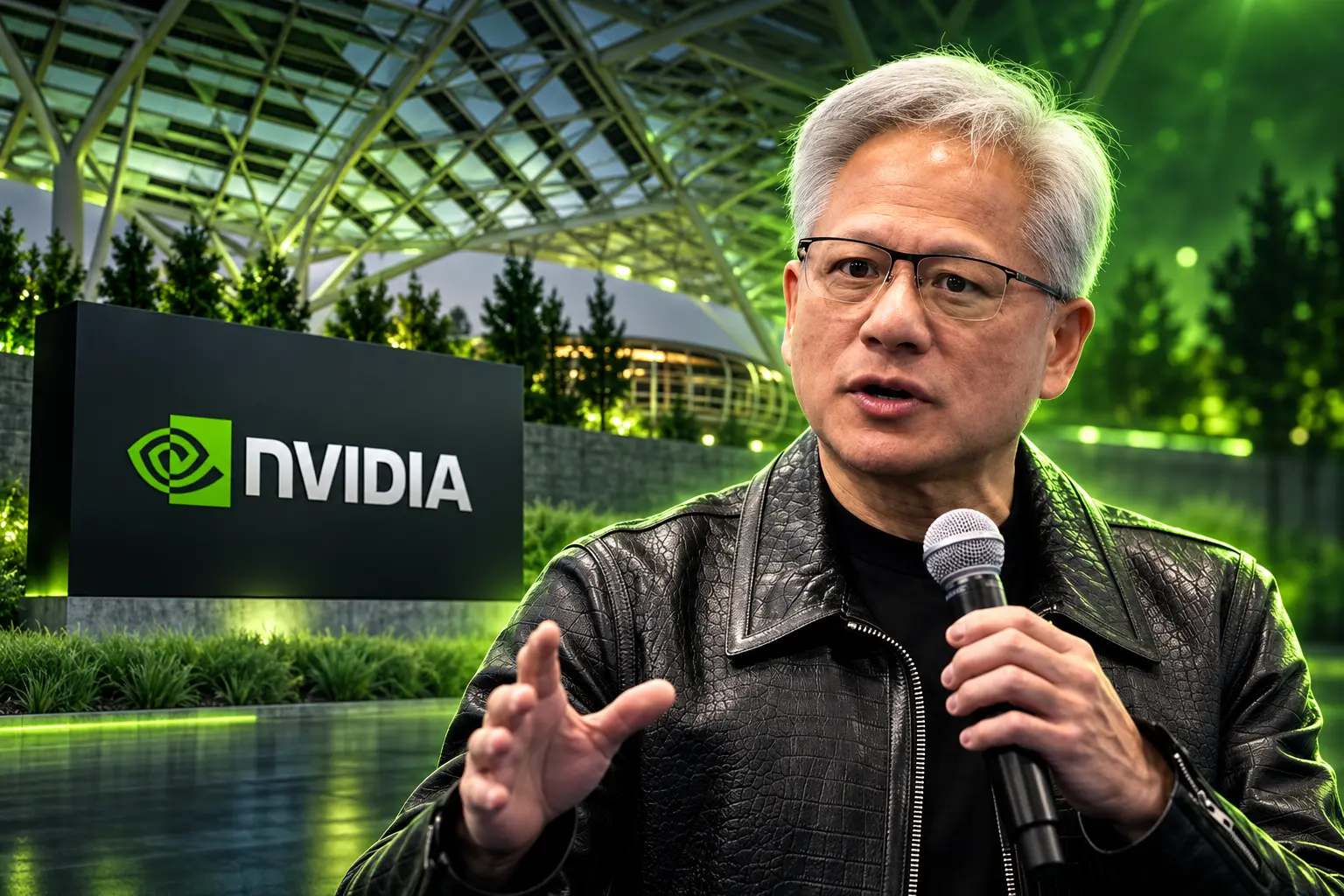
Nvidia’s board authorized an extra $150 billion of share buybacks on September 28, 2026, lifting remaining capacity to $235 billion through fiscal 2028. The chipmaker called it the largest share repurchase authorization increase in history. Founder and chief executive Jensen Huang said the cash coming in is enough to fund AI work and send money back to owners at the same time.
The confidence line is real. So is the leftover. In the quarter ended July 26, Nvidia posted second-quarter revenue of $96.2 billion and spent only $2.7 billion on property and equipment, then sent $26.0 billion out as buybacks and dividends, more than the $21.3 billion of free cash flow the quarter produced.
Nvidia’s Board Approved a $150 Billion Add-On
The new room sits on top of a program that was already large. After the July quarter the company still had about $99 billion authorized. Adding $150 billion to that leftover would have produced about $249 billion if nothing had been bought after July 26; the board instead put remaining capacity at $235 billion, which implies further purchases into September and leaves about $85 billion of older room underneath the fresh grant.
Huang tied the vote to a platform shift, not to a shortage of ideas inside the company.
NVIDIA’s growth is being driven by a once-in-a-generation platform shift to AI and accelerated computing. Our cash generation gives us the capacity to invest in the technologies that advance this transformation and return capital to shareholders. This authorization reflects our confidence in the long-term opportunity ahead.
Jensen Huang, founder and CEO, Nvidia newsroom statement, September 28, 2026
On CNBC’s Squawk Box the same morning, he went further. “I think we’re going through the largest infrastructure build-out in human history, and we have the benefit of being a very central part of that,” he said. He added that Nvidia will generate a lot of cash in the coming years and that, each year, he wants more of it returned to shareholders.
That is a plan, not a trade that already settled. Remaining capacity of $235 billion is a ceiling the company says it expects to work through by fiscal 2028. It is not a $235 billion order that hit the tape on Monday, a distinction a lot of the day’s commentary flattened in a hurry.
THE CAPITAL RETURN CALENDAR
- May 18, 2026: Board adds $80.0 billion of repurchase room with no expiration and lifts the quarterly dividend from $0.01 to $0.25 a share.
- May 20, 2026: First-quarter results show about $20.0 billion returned in the period and $38.5 billion of buyback capacity still unused before the new grant.
- June 26, 2026: First 25-cent dividend is paid, to holders of record on June 4.
- July 26, 2026: Second quarter closes with about $26.0 billion returned and about $99 billion of repurchase capacity still on the books.
- September 28, 2026: Board adds $150 billion and puts remaining capacity at $235 billion, to be used through fiscal 2028.
- October 1, 2026: Next 25-cent dividend is scheduled, to holders of record on September 10.
The May grant already told owners the company intended to run a mature return program while revenue was still doubling. September simply made the envelope larger than any prior U.S. add-on.
The Factories Sit on Someone Else’s Books
Nvidia designs chips and systems. Contract manufacturers own the plants that cut the wafers. That split is why a company that just booked $59.7 billion of GAAP net income in one quarter can still look, on a cash-flow statement, like a software vendor with a hardware logo.
Purchases related to property and equipment were $2.7 billion in the July quarter, against $7.1 billion of research and development and $24.1 billion of operating cash flow. Free cash flow, after those plant purchases and $59 million of related principal payments, was $21.3 billion. Then the company returned $26.0 billion to shareholders and issued $25.0 billion of senior unsecured notes for general corporate purposes.
Q2 FY2027 CASH, IN BILLIONS
| Line | Amount |
|---|---|
| GAAP net income | $59.7 |
| Operating cash flow | $24.1 |
| Free cash flow | $21.3 |
| Property and equipment purchases | $2.7 |
| Cash returned in buybacks and dividends | $26.0 |
| Senior notes issued | $25.0 |
Free cash flow fell from $48.6 billion in the first quarter because working capital moved the other way. Accounts receivable were $63.1 billion, with days sales outstanding at 60 versus 45 a quarter earlier, after Nvidia extended payment terms on large multi-quarter deals with certain investment-grade customers. Inventory rose to $31.6 billion from $25.8 billion as the company prepared to introduce Vera Rubin in the third quarter. The sales were booked. The cash had not all arrived.
Even after that squeeze, cash, cash equivalents and marketable debt securities were $56.6 billion at July 26, with another $42.8 billion of marketable equity securities on the same balance sheet. A company in that position can buy its own stock without pausing the product cycle. It can also borrow in the same quarter it is retiring equity, which is the move Apple spent a decade teaching the rest of large-cap tech.
Nvidia Took the Buyback Record From Apple
Apple’s board, in May 2024, authorized a new share repurchase program of up to $110 billion, which stood as the largest U.S. add-on until this week. Nvidia’s $150 billion increase is $40 billion larger than that mark. Apple had already spent years shrinking its share count while iPhone growth cooled. Nvidia is copying the form of that program while its sales are still up 106% from a year earlier.
The July quarter’s $96.2 billion of revenue included $89.0 billion from data center, up 117% year over year, split between $48.7 billion of hyperscale sales and $40.3 billion from AI clouds, industrial and enterprise customers. Edge computing added $7.2 billion. GAAP gross margin was 75.0%. Diluted earnings were $2.46 a share. Guidance for the third quarter is $108.0 billion of revenue, plus or minus 2%, with no China data-center compute assumed in that outlook.
Those are growth-company numbers sitting next to a capital-return calendar that now looks like a cash-compounder’s. Huang has called Nvidia a growth-value stock. The September authorization is the value half, written at a scale Apple reached only after the iPhone had already become a mature product.
The Same Checkbook Backs Memory, Leases and OpenAI
The buyback is not proof that Nvidia has nowhere to put money. Chief financial officer Colette Kress’s commentary on the July quarter shows the opposite: the company is using its balance sheet to lock supply, house research and back customers who want land and power faster than their own credit can move.
Supply and capacity commitments of $279 billion were on the books as of July 26, up from $119 billion a quarter earlier, primarily for memory. Total disclosed future commitments were $366 billion.
FUTURE COMMITMENTS AT JULY 26, 2026
- Supply and capacity: $279 billion, mostly memory, across the rest of fiscal 2027 through 2032 and after.
- Cloud service agreements: $29 billion to power Nvidia’s own research, models and autonomous-vehicle software.
- Data center leases not yet started: $25 billion, some with terms of up to 20 years.
- Equity investments: $25 billion earmarked for AI model makers, infrastructure financiers and other private companies.
- Capital expenditure commitments: $8 billion, a rounding error next to the memory book.
- Guarantees: $3.5 billion on land, power and shell for certain AI cloud partners, plus $105.0 billion of SB Energy Corp. guarantees, for a $108.5 billion gross total.
The SB Energy piece is tied to about 4.25 gigawatts at the PORTS-Pike Technology Campus in Ohio, which is meant to host Nvidia gear under 20-year leases to OpenAI, with the first capacity expected in fiscal 2029. Nvidia says each generation of its infrastructure at that site could represent about 1.5 million GPUs, or about $150 billion to $200 billion of Nvidia revenue, and that the guarantee shrinks as OpenAI pays the rent. There is an option for about 3.8 more gigawatts as the campus grows.
Those are customer-finance and supply contracts, not fabrication plants. They still leave a residual. After memory is locked, leases are signed, equity stakes are taken and a $105 billion OpenAI-site guarantee is on the page, the board still found $150 billion of extra room to retire stock. That is the irony: the AI boom is so cash-rich for the chip vendor that it can act like a bank for the build-out and like Apple for the share count in the same fiscal year.
What $235 Billion Can Retire at Recent Prices
The 24.1 billion shares of common stock outstanding as of August 21, 2026, are the base the repurchase program has to work against. At about $230 a share, $235 billion would buy roughly 1 billion shares, or about 4% of that count, if every dollar were spent at that price and no new shares were issued.
THE $235 BILLION ENVELOPE
- The ceiling: $235 billion of remaining authorization, which Nvidia says it expects to execute through fiscal 2028.
- The implied stock: About 1 billion shares at roughly $230, or about 4% of the 24.1 billion shares outstanding in August.
- The offset: Employee issuance and tax-withholding keep refilling part of the pool, so dollars spent do not cut the count one for one.
- The pace test: Spreading $235 billion evenly over the six remaining quarters through fiscal 2028 would mean on the order of $39 billion a quarter, in line with recent operating cash flow, not with plant spending.
Weighted-average diluted shares in the July quarter were 24.3 billion. The count is already drifting down, just not as fast as the headline dollars suggest, because stock still goes out the door to staff. A program this large still matters for earnings per share if it is used. It matters less as a one-week event than as a multi-year bid under the float of the most widely held AI stock.
Whether that bid shows up in the share count depends on prices Nvidia is willing to pay and on how much cash collection catches up after the receivable bulge. The July quarter already showed the gap: $26.0 billion left the company while $21.3 billion of free cash flow came in, with the $25.0 billion note issue helping cover the difference.
The Dividend Jump From a Penny to 25 Cents
The quieter signal arrived in May, not in September. Raising the quarterly dividend from a penny to 25 cents is a 25-times increase. On 24.1 billion shares, a $1.00 annualized payout would cost about $24.1 billion a year, a sum that would have looked fictional when the coupon was four cents. The next payment is $0.25 a share on October 1, 2026.
Buybacks can be slowed without a press release. A 25-cent coupon is harder to walk back without looking cautious. That is why the May vote, paired with the extra $80.0 billion of repurchase room, already marked the turn. September’s $150 billion add-on is the same policy written in a larger font.
Huang spent part of September 28 trying to talk about something else. Nvidia launched its Open Agent Safety Platform the same day, a pairing of OpenShell software and a Sentry watchdog that runs on BlueField-4 data-processing units and is meant to quarantine agents that step outside set limits. On Squawk Box he said that work was the bigger news. The stock conversation stayed on the buyback, because $150 billion is a number every screen can parse and agent-containment software is not.
Remaining Room Through Fiscal 2028
Nvidia’s fiscal 2028 is the deadline the company put on the remaining $235 billion. The program can run slower than that, and it can be expanded again, as it was in May and again in September. It cannot, by itself, keep data-center revenue climbing 117%. The chip cycle still has to fund the purchases, collect the receivables and ship Vera Rubin.
If the board uses the room, remaining holders will own a slightly larger slice of each dollar of profit. If it does not, the $235 billion will sit as unused capacity, which is how most giant authorizations spend at least part of their lives. Either way, the September vote is what a fabless vendor does when the AI boom pays it faster than wafer plants, memory contracts and customer guarantees can take the cash back in.
The company said it expects to execute the remaining program through fiscal 2028. Until those dollars actually hit the open market, the record is a ceiling, and the share count is still 24.1 billion.
Disclaimer: This article is news reporting and analysis of Nvidia’s share-repurchase authorization and related financial results, and it is for information only. It is not investment advice, a recommendation to buy or sell Nvidia or any other security, or a forecast of future returns. Readers should consult a licensed financial adviser or other qualified investment professional who can consider their own objectives and risk tolerance before making any decision. Figures, authorizations, share counts and product timelines reflect company filings and statements as of the dates cited and can change as later quarters are reported.

MLB and the Union Will Not Extend the Labor Deal

Amazon Found PHP2Shell Probes Four Days Before the Patch

Brent Clears $117 After Gulf Crude Already Came Back

Chipmakers Took the Nasdaq Hit After Meta Burned Cash

Netflix Scored Its 2026 Series as Flops Against Home Runs

Rolex Made Drake the Daytona It Fights Jewelers Over

Treasury’s First Iran Bank Shot Lands on an Ally

Instinct’s $2.5 Billion Raise Still Binds the User as Agent

City’s £125m Enzo Deal Caps a £327m Midfield Rebuild

CSIRTs Inherit Europe’s Missing security.txt Before Article 14
-
 ENTERTAINMENT2 months ago
Rolex Made Drake the Daytona It Fights Jewelers Over
-
 BUSINESS2 months ago
Treasury’s First Iran Bank Shot Lands on an Ally
-
 NEWS2 months ago
Instinct’s $2.5 Billion Raise Still Binds the User as Agent
-
 NEWS2 months ago
City’s £125m Enzo Deal Caps a £327m Midfield Rebuild
-
 NEWS2 months ago
CSIRTs Inherit Europe’s Missing security.txt Before Article 14
-

 BUSINESS2 months ago
Berkshire Anchors Alphabet’s Record Raise With a $10 Billion Check
-
 NEWS2 months ago
Meta’s Teen Settlement Leaves Chat Off the Clock
-

 ENTERTAINMENT2 months ago
Ricky Gervais Wants Alley Cats to Run Until He Dies