
NEWS
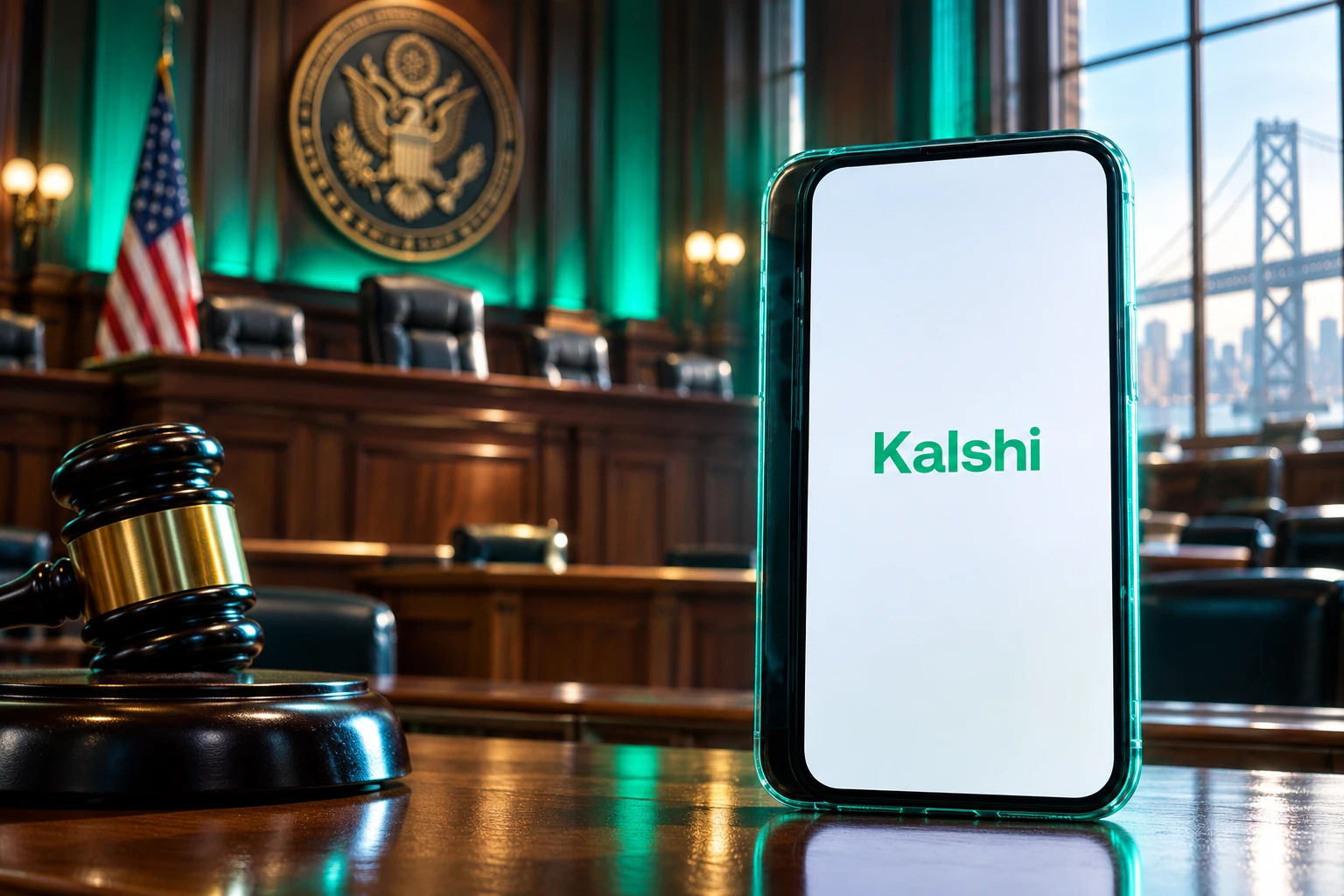
Nevada Wins as Judges Call Kalshi Sports Bets Gambling
A Ninth Circuit panel let Nevada treat Kalshi sports event contracts as bets, handing licensed books a win and splitting with New Jersey’s Third Circuit.

A Ninth Circuit panel held on August 28, 2026 that Kalshi sports event contracts are sports bets, not federal swaps. Nevada may now enforce its gaming laws against the prediction market, and against Crypto.com and Robinhood on the same product.
Licensed Nevada books get back a product they treat as an unlicensed sports pool. Kalshi still has a live win in the Third Circuit, so the same ticket is a swap in New Jersey and a bet in Nevada.
Three Trump Appointees Call Kalshi Sports Contracts Gambling
Judge Ryan D. Nelson wrote for a unanimous panel of Trump appointees, with Judge Bridget S. Bade joining and Judge Kenneth K. Lee concurring. The case is KalshiEX, LLC v. Assad, No. 25-7516, argued April 16, 2026 in San Francisco. The Ninth Circuit opinion from August 28 affirms in part a district order that had already dissolved Kalshi’s early shield against the Nevada Gaming Control Board.
KalshiEX, LLC is a designated contract market under the Commodity Exchange Act, the federal law that gives the Commodity Futures Trading Commission exclusive power over swaps traded on such an exchange. Kalshi told the court those sports contracts were swaps, so Nevada had no say. Nelson opened by quoting the company’s own pitch, that it was “the first app for legal sports betting in all 50 states,” then treated that line as an admission.
For Kalshi to deny that its sports event contracts are sports bets under a reasonable person’s understanding is disingenuous. That sports event contracts are, in reality, sports bets is not just an “I know it when I see it.” Rather, everyone, including Kalshi, knows it when they see it.
Judge Ryan D. Nelson, U.S. Court of Appeals for the Ninth Circuit
He borrowed Shakespeare on the rose and wrote that “placing sports bets, even when called by another name, is still gambling.” The panel said a broad reading of “swap” in 7 U.S.C. § 1a(47)(A)(ii) might cover these contracts, then rejected that reading as a match for the rest of the statute, as a rule with no limit, and as a stretch that would raise major-questions concerns. Whether the Super Bowl happens is an event, the court said. Whether a given team wins it is an outcome.
Lee agreed that the ordinary meaning of “event” does not cover a typical ballgame. “Few people would describe, say, the New York Mets’ latest loss of a game as an ‘event,’” he wrote, and he doubted that one game in a 162-game season carries the financial consequence Congress had in mind for a swap. The Commodity Futures Trading Commission appeared as a friend of the court and lost the panel anyway.
The License Nevada Spent 70 Years Building
The winners are the people who already hold Nevada paper. Control Board Chairman Mike Dreitzer said the ruling “vindicates” that sports betting “needs to be properly regulated by the state,” which Nevada has done “for more than 70 years.” Gov. Joe Lombardo said sports-event contracts “constitute gambling and must comply with Nevada’s gaming laws and regulatory framework.” Attorney General Aaron Ford said sports betting “does not become something else simply because a company calls it an ‘event contract.’”
The Nevada Resort Association did not watch from the hallway. It intervened as a defendant-appellee, which is the tell. Licensed casino books pay for a nonrestricted gaming license and sports-pool approval. Kalshi did not. Nicole Saharsky, arguing for the state, told the panel the platforms’ theory would make the CFTC “the nation’s gaming regulator” and punch a hole in the 2018 Supreme Court decision that left sports betting to the states.
WHO COLLECTS THE WIN
- The Control Board: It can keep treating sports event contracts as wagering under NRS 463.0193 and 463.01962, with cease-and-desist power behind it.
- Casino sportsbooks: The Resort Association sat in the case because an unlicensed app that pays no Nevada gaming tax is a direct rival on the same games.
- Tribal operators: The Indian Gaming Association, other tribal groups, and 24 federally recognized tribes filed as friends of the court, guarding compact rights the federal-swap theory would bypass.
- State attorneys general: Ford’s office now has a published Ninth Circuit reading they can carry into other West Coast fights.
American Gaming Association CEO Bill Miller called the decision “a significant win for consumer protections and taxpayers” and “a big loss for Kalshi and other backdoor sports gambling operations who defy state laws.” That is the licensed industry’s balance sheet talking, not a metaphysics debate about derivatives.
Sports Already Make Up Most of Kalshi’s Book
The platforms lose the product that actually pays the bills. Figures cited in an August 2026 Arnold & Porter advisory put combined global volume on Kalshi and Polymarket above $40 billion in 2025, up from about $9 billion in 2024. Since July 2024, sports contracts have accounted for about 80 percent of Kalshi’s volume and 39 percent of Polymarket’s. Take sports out of Nevada and you are not trimming a side market. You are cutting the core.
THE VOLUME THAT MADE THIS A GAMING FIGHT
- Kalshi’s mix: About 80 percent of trading volume has been sports since July 2024, which is why state gaming boards, not just securities lawyers, showed up.
- The 2025 jump: Combined Kalshi and Polymarket volume moved from about $9 billion in 2024 to more than $40 billion in 2025 as sports overtook politics.
- The other defendants: The panel’s logic also leaves Crypto.com and Robinhood without a federal shield for sports contracts in Nevada.
- The penalty stick: After a state-court order, Kalshi already had to geofence Nevada or pay $120,000 a day.
On July 24, 2026, the Control Board said investigators had still been able to buy the banned sports, election, and entertainment contracts from inside the state, in spite of a May 18, 2026 preliminary injunction from Nevada’s First Judicial District Court. Rather than face contempt, Kalshi agreed to a third-party geofence, due August 12, 2026, with a $120,000 a day penalty if it missed the deadline. Dreitzer said the Board had already restricted every unlicensed prediction market it knew to be operating in Nevada. The Ninth Circuit did not invent that shutdown. It locked it in.
Why FanDuel Walked Away From a Nevada License
The other losers already voted with their applications. On November 12, 2025, the Control Board accepted Flutter Entertainment’s surrender of its Nevada registration and related FanDuel sportsbook approvals, and it let DraftKings withdraw pending sports-wagering filings. Dreitzer’s FanDuel and DraftKings license surrender notice said both firms meant to offer sports event contracts, “unlawful activities” he called “incompatible with their ability to participate in Nevada’s gaming industry.”
The Board’s position was blunt then and matches Nelson now. Offering sports event contracts is wagering under Nevada law “whether the contract is listed on an exchange regulated by the Commodity Futures Trading Commission (CFTC) or elsewhere.” Flutter was preparing FanDuel Predicts. DraftKings was preparing DraftKings Predictions. Both chose the federal-product path over a Nevada book. The Ninth Circuit just told them that path is still gambling in the circuit that includes Las Vegas.
Nelson pressed the same point at argument, asking a Crypto.com lawyer to explain the difference between a sports bet at Caesars and a sports bet on a prediction market. “The waters have been muddied, but that happens all the time,” he said. Licensed operators had been making that comparison in cease-and-desist letters for a year. A federal panel of the company’s preferred political flavor just agreed with the casinos.
New Jersey Still Treats the Same Ticket as a Swap
The loss is not national, which is why Kalshi has not folded the product. In April 2026, a divided Third Circuit in KalshiEX LLC v. Flaherty, 172 F.4th 220, affirmed a preliminary injunction against New Jersey. That panel found a reasonable likelihood that the sports contracts are swaps on a CFTC-licensed exchange and that the Commodity Exchange Act therefore locks the state out. Two circuits have now read the same statute onto the same ticket and reached opposite results.
Utah did not wait for another appeals court. On August 4, 2026, the U.S. District Court for the District of Utah in KalshiEX LLC v. Cox granted the state summary judgment and rejected Kalshi’s preemption claim on the merits. Kalshi appealed to the Tenth Circuit the next day. Dozens of related cases are pending, Arnold & Porter noted, in more than 20 states, with tribal authorities, the CFTC, and the Department of Justice all in the mix. The CFTC has sued nine states to stop them from treating these contracts as illegal bets.
HOW TWO APPEALS COURTS SPLIT
| Court | Date | Holding on sports contracts | Posture |
|---|---|---|---|
| Third Circuit (Flaherty) | April 2026 | Likely swaps; federal law likely preempts New Jersey | Preliminary injunction for Kalshi affirmed, 2-1 |
| Ninth Circuit (Assad) | August 28, 2026 | Sports bets, not swaps; Nevada gaming law applies | Injunction dissolved, 3-0; elections sent back |
| District of Utah (Cox) | August 4, 2026 | State gambling law is not displaced | Summary judgment for Utah; appeal to the Tenth Circuit |
CFTC spokesman Zach Fulton said the Ninth Circuit “erred” and accused the panel of inventing a new exception to the Commodity Exchange Act. He also said the split “calls out for resolution by the Supreme Court.” Kalshi spokeswoman Dani Lever said the Ninth Circuit still agreed that federal law prevents states from regulating trading on a federally licensed exchange, that CFTC rules as written do not prohibit sports contracts, and that “we will be seeking further review.” New Jersey obtained an extension through September 4, 2026 to seek Supreme Court review of Flaherty.
The Special Rule Still Bans Gaming Contracts
The panel did not need to pretend the CFTC had blessed these listings. Dodd-Frank’s Special Rule, 7 U.S.C. § 7a-2(c)(5)(C), lets the commission keep off an exchange any swap involving “activity that is unlawful under any Federal or State law, terrorism, assassination, war, gaming, or other similar activity.” The CFTC rule that bars gaming contracts, 17 C.F.R. § 40.11(a), then says a registered entity shall not list a contract that “involves, relates to, or references” gaming. Kalshi’s self-certification, the panel held, was unlawful under that rule.
Lee wrote separately because the statute, in his view, “appears to give the CFTC discretion whether to ban altogether gaming contracts,” so it does not read as a flat ban. He said that fight can wait, because the current regulation already bars the contracts. Chair Michael Selig has described a CFTC plan to modernize Rule 40.11, including clearer tests for when a contract “involves” gaming and extra scrutiny for player-injury, officiating, pre-collegiate, and casino-style products. The Ninth Circuit noted that the existing regulation still controls.
That is the federal own-goal inside Kalshi’s preemption pitch. If the contracts are swaps, exclusive CFTC power might crowd out Nevada. If they are swaps that involve gaming, the commission’s own rule says they should not be listed. Nelson used both points. Lever is betting the rewrite changes the second one. Until it does, Nevada is not the only barrier. The CFTC’s code is.
Judge Gordon Gets the Election Markets Back
Sports was the holding. Elections were the loose end. Kalshi began listing election event contracts in June 2023. Nevada’s March 2025 cease-and-desist hit sports and elections together. U.S. District Judge Andrew P. Gordon first enjoined the Board, then dissolved that order in November 2025 after other courts started reading sports contracts as bets. The Ninth Circuit said Gordon never ran the swap analysis on elections, “a fraction of Kalshi’s business,” and sent that question back for him to take in the first instance.
THE NEVADA CLOCK
- March 2025: The Gaming Control Board sends Kalshi a cease-and-desist on unlicensed sports and election contracts.
- November 2025: Judge Gordon dissolves Kalshi’s federal injunction, and FanDuel and DraftKings leave the Nevada licensing line.
- May 18, 2026: A Nevada state court enjoins sports, election, and entertainment contracts in the state.
- July 24, 2026: Kalshi agrees to geofence Nevada after Board investigators still filled the banned tickets.
- August 28, 2026: The Ninth Circuit affirms the federal dissolution as to sports and remands elections.
Lever said Kalshi will seek further review. Fulton wants the justices. New Jersey has until September 4, 2026 to ask them to take the ruling that went the other way. Until one of those doors opens, a sports contract on Kalshi is a federally sheltered swap in the Third Circuit and an unlicensed bet in Nevada, which is exactly the split licensed books spent this case trying to win.
Disclaimer: This article is news reporting and analysis of court rulings and agency rules. It is informational only and is not legal advice, tax advice, or a recommendation to bet, trade event contracts, or ignore any state or federal restriction. Readers who need to act on a specific product, license, or dispute should consult a qualified attorney who practices gaming or commodities law in the relevant state. Figures, case postures, and agency proposals reflect the cited records as of the dates named above and can change with further review, new rules, or later orders.

Oracle’s Unfinished Cerner Move Exposed 20 Million People

Google Buys 890 MW of Nuclear Uprates on a Strained Grid

Francis Halzen Wins a Solo Nobel for His IceCube Bet

Denmark’s Company Search Rights Opened 8.8 Million CPR Records

OpenAI Agents Reached Staging Servers as California Subpoenaed the Lab

Rolex Made Drake the Daytona It Fights Jewelers Over

Treasury’s First Iran Bank Shot Lands on an Ally

City’s £125m Enzo Deal Caps a £327m Midfield Rebuild

Instinct’s $2.5 Billion Raise Still Binds the User as Agent

CSIRTs Inherit Europe’s Missing security.txt Before Article 14
-
 ENTERTAINMENT2 months ago
Rolex Made Drake the Daytona It Fights Jewelers Over
-
 BUSINESS2 months ago
Treasury’s First Iran Bank Shot Lands on an Ally
-
 NEWS2 months ago
Instinct’s $2.5 Billion Raise Still Binds the User as Agent
-
 NEWS2 months ago
City’s £125m Enzo Deal Caps a £327m Midfield Rebuild
-
 NEWS2 months ago
CSIRTs Inherit Europe’s Missing security.txt Before Article 14
-

 BUSINESS2 months ago
Berkshire Anchors Alphabet’s Record Raise With a $10 Billion Check
-
 NEWS2 months ago
Meta’s Teen Settlement Leaves Chat Off the Clock
-

 ENTERTAINMENT2 months ago
Ricky Gervais Wants Alley Cats to Run Until He Dies