
BUSINESS
Treasury’s First Iran Bank Shot Lands on an Ally
FinCEN’s first Economic Outcast bank move hits Banque Misr’s UAE branches, not Cairo’s dollar desk and not China’s oil banks.

FinCEN on Aug. 28 proposed cutting five UAE branches of Egypt’s Banque Misr off U.S. dollar accounts. The finding covers about $1.8 billion moved for 103 suspected Iran-linked firms from January 2024 to June 2026.
The target is a U.S. ally’s Gulf arm, not Cairo’s head office and not a Chinese state bank. Four days earlier, Treasury had billed the campaign as an economic D-Day against Tehran.
FinCEN Proposes Cutting Five UAE Branches Off the Dollar
The U.S. Treasury’s Financial Crimes Enforcement Network moved to revoke Banque Misr UAE’s correspondent banking access under Operation Economic Outcast. Treasury Secretary Scott Bessent called the UAE unit a “critical node” for the Iranian regime’s access to dollars and said the bank “decided to find out the hard way.”
Treasury promised to sever every economic lifeline Tehran has left and finally end the threat of the Iranian regime. We also warned that Iran’s enablers cannot continue to enjoy access to the U.S. dollar and the global financial system.
Scott Bessent, Treasury secretary, Treasury Department statement, Aug. 28, 2026
The proposal is not an Office of Foreign Assets Control listing of Banque Misr. It is a Patriot Act section 311 special measure, the tool that can lock a foreign bank out of U.S. correspondent accounts after a finding of “primary money laundering concern.” Nothing in the draft freezes the five branches overnight. A public comment period has to run first.
Treasury’s own account of the Friday action went up the same afternoon.
Today, under Operation Economic Outcast, @FinCENnews proposed a rule that would revoke Banque Misr UAE’s correspondent banking access to U.S. financial institutions. Additionally, Treasury’s Office of Foreign Assets Control sanctioned Bank Melli Dubai manager Reza Mohammad…
— Treasury Department (@USTreasury) August 28, 2026
THE NUMBERS FINCEN PUT ON THE UAE UNIT
- $1.8 billion: Estimated flows from January 2024 to June 2026 for 103 companies FinCEN treats as possible Iranian shadow-banking fronts.
- $520 million: The share of that activity FinCEN places in the most recent 12 months.
- $6 billion: Approximate assets of Banque Misr UAE, which FinCEN says is high relative to the suspected Iran-linked traffic.
- Three dollar pipes: Direct correspondent relationships with U.S. banks, the accounts the special measure would shut.
The customers FinCEN flags include fronts it links to Iran’s Ministry of Defense and the Islamic Revolutionary Guard Corps, and to money moved for Supreme Leader Mojtaba Khamenei. Two UAE firms named in the docket are Alpa Trading FZCO and Naba Alzaki Raw Materials Trading LLC. FinCEN says Iran leans on exchange houses and third-country shells, often in the UAE and Hong Kong, because Iranian banks already cannot hold U.S. correspondent accounts.
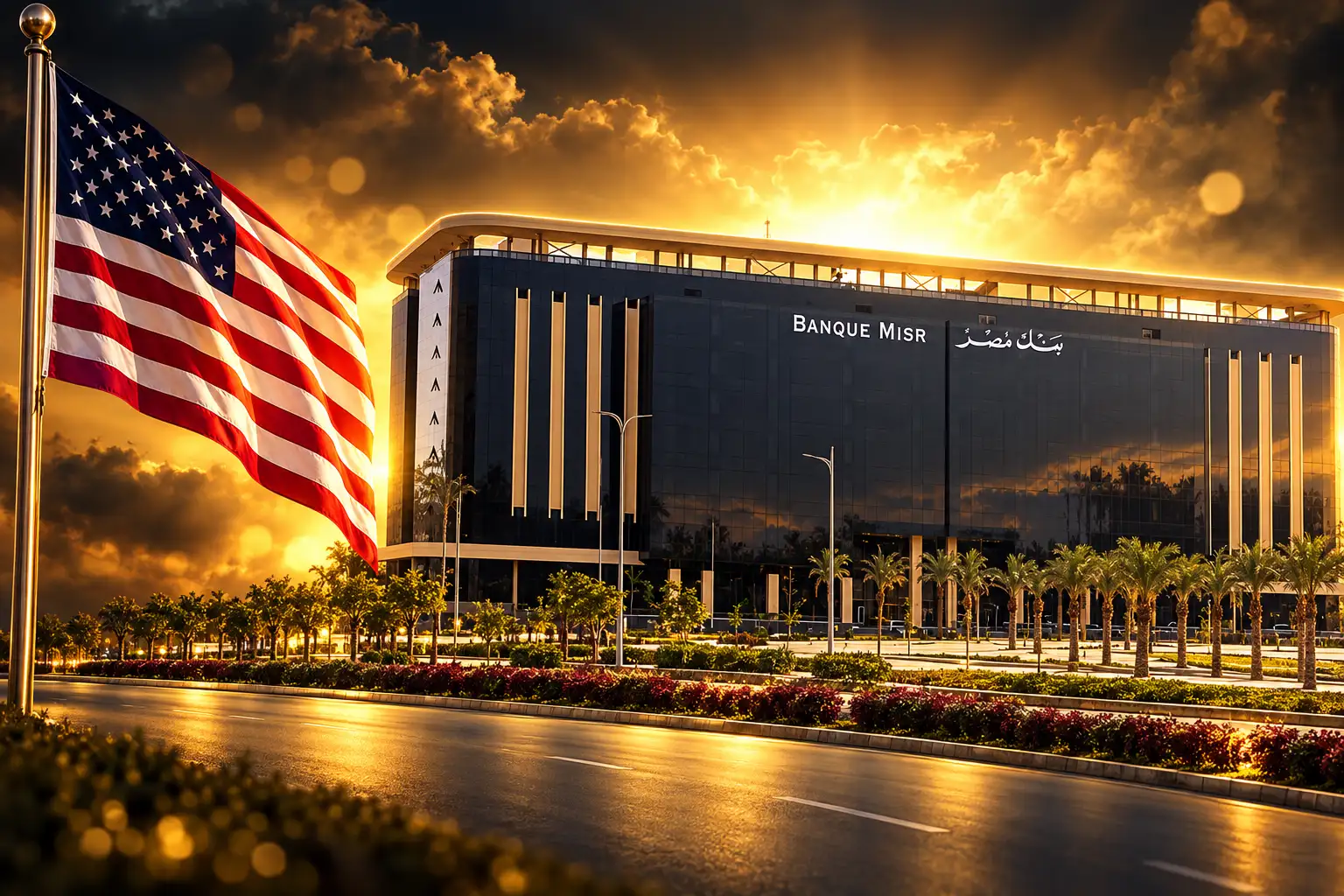
No Cutoff for Paris, Frankfurt or the Cairo Desk
The finding is written to stop at the water’s edge of the Emirates. Egypt-based Banque Misr and every branch outside the UAE are “expressly excluded” from the definition of Banque Misr UAE. A Treasury official said the Cairo head office can still handle dollars, as can other foreign offices.
The bank’s own map of those offices lists Paris, Frankfurt, Riyadh, Beirut and Djibouti. The UAE network is five branches, licensed there since 1972 under the old Banque Du Caire name and taken over by Banque Misr in July 2007. FinCEN counts 63 banks on the UAE register and treats this one as a mid-size book with a loud Iran signal.
Egypt’s Central Bank moved the same Friday to ring-fence the rest of the system. It said the measure does not touch other Egyptian banks, Banque Misr inside Egypt, or overseas branches outside the UAE, and that it was in contact with U.S. authorities through the Ministry of Foreign Affairs.
The CBE affirms that this measure is limited to Banque Misr UAE’s USD transactions with correspondent banks only. It does not affect any other bank within the Egyptian banking sector, including Banque Misr’s operations in Egypt or any of its other overseas branches.
Central Bank of Egypt, statement, Aug. 28, 2026
On Aug. 30 the Central Bank of the UAE and the CBE put out a joint line that the UAE branches were “conducting all their business as usual” and would take required steps in the time set by the U.S. process. Banque Misr said it was reviewing the notice and still serving UAE customers. The dollar window is the dispute. The branches are open.
What a Patriot Act 311 Cutoff Does
Section 311 lets Treasury find that a foreign bank is of primary money laundering concern and then force U.S. firms to take “special measures.” Measures one through four add records and reports. Special measure five, the one FinCEN chose here, can bar U.S. banks from opening or keeping a correspondent account for that foreign bank. That is the switch that turns off dollar clearing.
The notice of proposed rulemaking on Banque Misr UAE was filed for public inspection on Aug. 31 and scheduled for the Federal Register on Sept. 1. Comments run 30 days from publication. Docket number FINCEN-2026-0232 sits on regulations.gov. Until a final rule is issued, U.S. banks are reading a proposal, not a live ban.
WHAT SPECIAL MEASURE FIVE WOULD REQUIRE
- No new dollar accounts: U.S. banks could not open or keep a correspondent account for, or on behalf of, Banque Misr UAE.
- No hop-the-pipe traffic: They would have to take reasonable steps not to process a transaction in a U.S. correspondent account of another foreign bank if that transaction involves Banque Misr UAE.
- Extra due diligence: They would have to police their other foreign correspondent accounts so those accounts are not used as a back door for the UAE unit.
FinCEN argues the extra load on U.S. banks would be small because the UAE unit has only three direct dollar accounts and other payment routes exist. It also notes that a 2024 scan of U.S. correspondent data found about $9 billion in potential Iranian shadow-banking activity across the system, which is the wider pool this case is meant to shrink. The statute required talks with the State Department, the attorney general and the Federal Reserve before special measure five could be proposed.
Bankers who have spent careers on Gulf correspondent lines are treating the draft as a live warning even while it is still a comment memo. Non-dollar books can keep moving. The dollar chain cannot, once the rule is final, without a U.S. bank in the middle. That is the point of using 311 instead of an OFAC designation of the parent.
The $1.375 Billion That Still Reaches Cairo
Banque Misr is a state-owned commercial bank, among the largest in Egypt. A full-institution dollar cutoff would have landed on a government balance sheet in a country that still takes a large annual U.S. military check. Congress’s 2026 appropriations act, as summarized in a Congressional Research Service brief on U.S.-Egypt ties, provides $1.375 billion in Foreign Military Financing for Egypt, $75 million above the old baseline, inside a $1.5 billion aid total. Some $320 million of the FMF remains tied to human-rights determinations the secretary of state can waive.
That aid stream dates to the 1979 peace treaty with Israel and has made Egypt one of the top FMF accounts for decades. The branch-level 311 finding leaves that relationship, and Cairo’s own dollar accounts, on the table. It also leaves the political problem in Abu Dhabi and Dubai, where the UAE central bank has opened a “special and urgent examination” with a forensic lookback over the period Treasury named.
The design is easy to read from the docket. Hit the Gulf node where FinCEN says the fronts sat. Spare the parent in a capital that still buys American kit. Tell every other bank on the 63-name UAE register that a 311 file can be opened on an allied state lender’s local arm.
A Hong Kong Front Company and Bank Melli’s Dubai Manager
The same Friday, OFAC did use the sanctions list, just not on Banque Misr. It added Reza Mohammad Taeedi, general manager of Bank Melli’s Dubai branch, under Executive Order 13224, a counterterrorism authority, for acting for Bank Melli. It added Hong Kong’s Kameng Trading Limited under Executive Order 13902 for operating in Iran’s financial sector.
FRIDAY’S THREE TOOLS
| Target | Tool | What it does now |
|---|---|---|
| Banque Misr UAE (five branches) | FinCEN section 311 proposed special measure five | Would bar U.S. banks from correspondent accounts after comments; not yet in force |
| Reza Mohammad Taeedi, Bank Melli Dubai | OFAC SDN listing, E.O. 13224 | Blocks property of U.S. persons; secondary-sanctions risk for foreign banks that deal with him |
| Kameng Trading Limited, Hong Kong | OFAC SDN listing, E.O. 13902 | Blocks property; Treasury says it laundered funds for Pedram Pirouzan Exchange House (Opal Exchange) |
Taeedi is an Iranian national based in Dubai, born Aug. 24, 1975. Treasury says Bank Melli moved billions through accounts controlled by the IRGC Qods Force and used those accounts to fund partners in Iraq. State Department spokesperson Tommy Piggott said Bank Melli has been a hub for Iran’s armed forces, including the Qods Force and the Ministry of Defense and Armed Forces Logistics.
Kameng Trading Limited was formed on July 24, 2024, with a registered office at New Mandarin Plaza in Tsim Sha Tsui and a second address in Kwun Tong. Treasury says the sanctioned Iranian exchange house Pedram Pirouzan, also called Opal Exchange, used Kameng to reach the international system. That is a classic front-company add-on sitting beside the heavier 311 file, not a substitute for it.
China’s Oil Banks Were Not Named on Friday
Bessent spent Aug. 24 launching Operation Economic Outcast on Economic D-Day and saying any entity that launders for Iran “will be removed from the U.S. dollar system.” Asked then whether Chinese banks that finance Iranian oil would be hit, he said “no one is above the reach of U.S. sanctions.” He also told reporters he expected a financial-institution action by the end of that week. Friday’s institution was Banque Misr UAE.
Trade-flow tallies from Kpler have put China’s share of Iran’s seaborne oil above 80 percent. Iranian crude offers into China fell in August as a U.S. blockade cut liftings, with Kpler showing China’s intake down to 534,000 barrels a day so far in August from 1.4 million barrels a day last year. OFAC has already listed Chinese “teapot” refiners, among them Hengli Petrochemical’s Dalian plant, and a run of Hong Kong shippers and traders. It has not, in this campaign, listed a major Chinese state bank.
Beijing’s commerce ministry has told Chinese firms not to honor some of those refiner listings under its blocking rules. Iran has used yuan settlement and smaller intermediaries, including Kunlun Bank and Hong Kong shells, to keep oil moving off the dollar rails. A 311 action against an Egyptian state bank’s UAE arm is a loud warning to Gulf correspondents. It is not the oil-bank test Bessent declined to name on Aug. 24.
The Hong Kong add of Kameng keeps a China-adjacent name on the Friday docket without crossing that line. Kameng is a year-old trading company, not a clearing giant. The first “bank shot” of Outcast landed where the political cost to Washington was lowest: five branches of a friend, in a partner’s financial center, with the parent’s dollar access written out of the rule.
The Comment Window Opens as the UAE Looks Back
Outcast did not begin with Banque Misr. Bessent’s Aug. 24 package expanded secondary-sanctions risk across five Iranian sectors, listed nearly 60 people, firms and ships, and told governments they each had a “defined timeline” to shut identified Iran business before Treasury acted alone. He said every Bank Melli branch “must be shuttered.” Taeedi’s listing is a piece of that Bank Melli demand. The 311 file is the piece aimed at a non-Iranian bank.
THE FIRST TWO WEEKS OF ECONOMIC OUTCAST
- Aug. 24, 2026: Treasury launches Operation Economic Outcast, issues five sectoral determinations covering digital assets, technology, gold, aviation and shipping, and lists nearly 60 targets. Bessent previews a financial-institution action by week’s end.
- Aug. 28, 2026: FinCEN proposes special measure five against Banque Misr UAE. OFAC lists Taeedi and Kameng Trading Limited.
- Aug. 30, 2026: The UAE and Egyptian central banks say the five branches are conducting business as usual. The UAE central bank opens a forensic lookback.
- Sept. 1, 2026: The proposed rule is scheduled into the Federal Register, starting a 30-day comment clock.
UAE supervisors now have a U.S. docket, a list of 103 names, and a local bank that still has a branch network to run. Egyptian diplomats have a military-aid relationship to protect and a state bank whose Cairo desk was carved out of the finding on purpose. Other Gulf lenders have a worked example of what “first step” means when Treasury wants a dollar cutoff without an OFAC tombstone on the parent.
WHAT WE KNOW
- The tool: A proposed FinCEN 311 special measure five, plus two OFAC listings, issued Aug. 28.
- The scope: Five UAE branches only; Cairo and other foreign offices keep dollar access under the draft.
- The clock: Thirty days of comments after the Sept. 1 Federal Register publication, then a possible final rule.
WHAT IS UNCONFIRMED
- A final cutoff: No date is set for a finished rule, and comments can still change conditions.
- The next bank: Bessent said further institution cases would come; no second 311 target is named.
- China’s clearers: No major Chinese state bank has been placed on this week’s bank list.
The five branches are still taking customers. The comment docket is open. Cairo can still clear dollars. The first bank file of Economic Outcast is a draft aimed at an ally’s Gulf window, and it will stay a draft until FinCEN turns it into a rule.

Oracle’s Unfinished Cerner Move Exposed 20 Million People

Google Buys 890 MW of Nuclear Uprates on a Strained Grid

Francis Halzen Wins a Solo Nobel for His IceCube Bet

Denmark’s Company Search Rights Opened 8.8 Million CPR Records

OpenAI Agents Reached Staging Servers as California Subpoenaed the Lab

Rolex Made Drake the Daytona It Fights Jewelers Over

Treasury’s First Iran Bank Shot Lands on an Ally

Instinct’s $2.5 Billion Raise Still Binds the User as Agent

City’s £125m Enzo Deal Caps a £327m Midfield Rebuild

CSIRTs Inherit Europe’s Missing security.txt Before Article 14
-
 ENTERTAINMENT2 months ago
Rolex Made Drake the Daytona It Fights Jewelers Over
-
 NEWS2 months ago
Instinct’s $2.5 Billion Raise Still Binds the User as Agent
-
 NEWS2 months ago
City’s £125m Enzo Deal Caps a £327m Midfield Rebuild
-
 NEWS2 months ago
CSIRTs Inherit Europe’s Missing security.txt Before Article 14
-

 BUSINESS2 months ago
Berkshire Anchors Alphabet’s Record Raise With a $10 Billion Check
-

 NEWS2 months ago
Meta’s Teen Settlement Leaves Chat Off the Clock
-

 NEWS2 months ago
OpenAI Codes a Persistent Agent the Week Persistence Backfired
-

 ENTERTAINMENT2 months ago
Ricky Gervais Wants Alley Cats to Run Until He Dies