
BUSINESS
Berkshire Anchors Alphabet’s Record Raise With a $10 Billion Check
Berkshire nearly doubled its Alphabet holding to $37.8 billion via a $10 billion private placement, even as $365 billion in cash stayed on the sidelines.

Berkshire Hathaway raised its Alphabet stake 83% in the second quarter, to 105,979,600 shares valued at $37.8 billion on June 30. A $10 billion private order inside Google’s parent record equity raise did a large part of the work, and a pile of cash that still topped $365 billion did the rest.
The 13F filed August 14 makes Alphabet Berkshire’s third-largest U.S. listed holding only when the two share classes are added together, behind Apple at $66.0 billion and American Express at $51.3 billion. Coca-Cola, at $32.5 billion, would still rank ahead of either Alphabet line on its own. Chairman Warren Buffett has said he started the Google bet. He has also said the company is now in a spending race it does not want to play.
Berkshire’s Alphabet Stake Jumped 83% in One Quarter
Class A shares (GOOGL) rose by 24,541,369 to 78,791,167, worth $28.16 billion and 9.41% of the $299.3 billion 13F book. Class C shares (GOOG) rose by 23,603,218 to 27,188,433, worth $9.61 billion and 3.21%. Combined, Alphabet is 12.6% of that U.S. equity file, across 29 reported names.
Three months earlier the two lines totaled 57,835,013 shares. The quarter added 48,144,587 shares. Berkshire’s own second-quarter report names Alphabet among the five largest equity holdings in June, with Apple, American Express, Bank of America, and Coca-Cola, and says those five names were 66% of the $323.8 billion equity-securities total on the balance sheet.
BERKSHIRE’S LARGEST U.S. LISTED HOLDINGS ON JUNE 30
| Holding | Shares | Value | Share of 13F |
|---|---|---|---|
| Apple | 227,917,808 | $66.0B | 22.04% |
| American Express | 151,610,700 | $51.3B | 17.14% |
| Alphabet (GOOGL + GOOG) | 105,979,600 | $37.8B | 12.6% |
| Coca-Cola | 400,000,000 | $32.5B | 10.86% |
| Bank of America | 483,394,015 | $27.54B | 9.20% |
Bank of America was cut by 30,230,150 shares in the same quarter. Delta Air Lines rose 44% to 57,320,000 shares worth $5.37 billion. Lennar Class A rose 30% to 13,111,741 shares. Constellation Brands was sold in full.
7.8 billion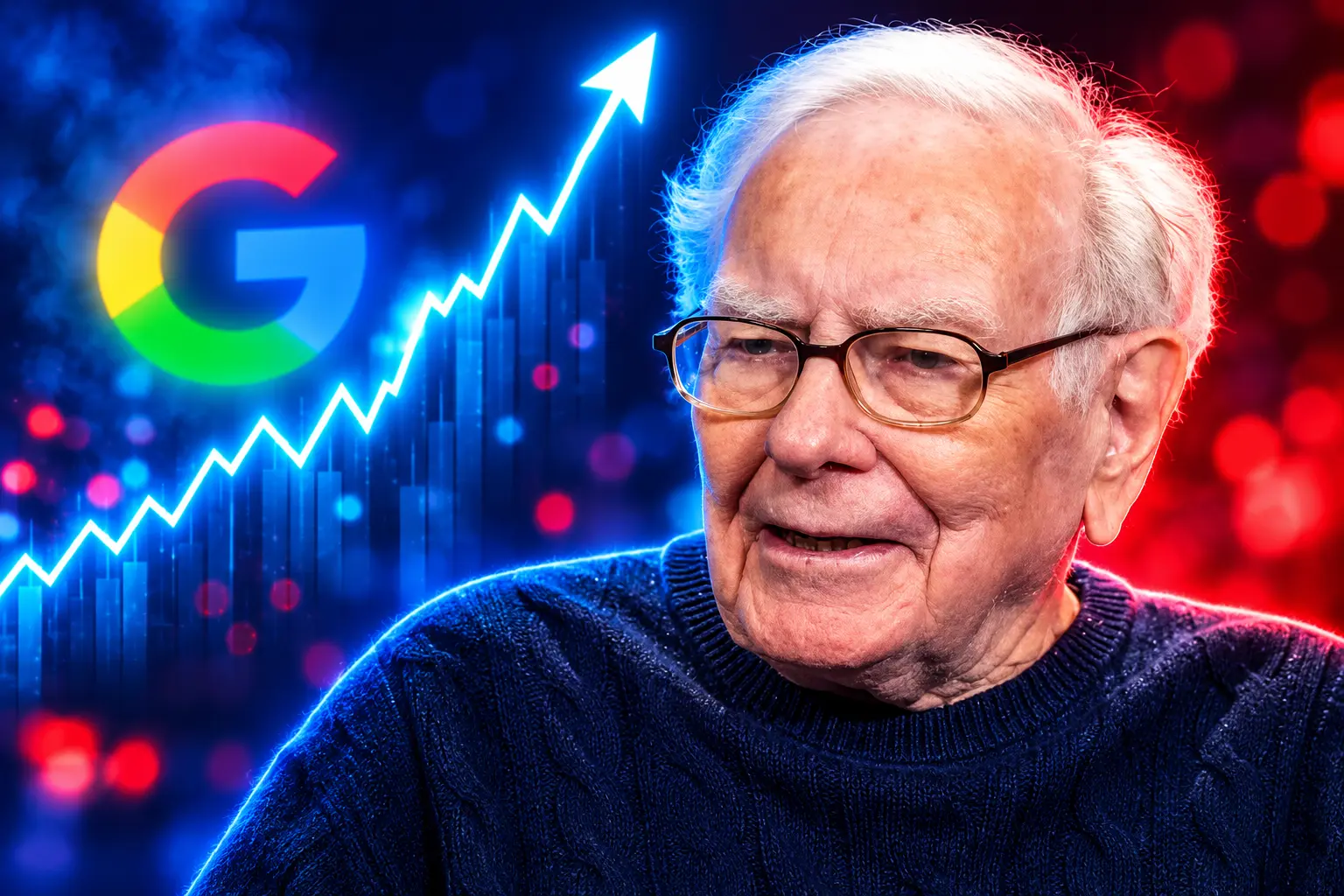
The $10 Billion Check That Anchored Alphabet’s Record Raise
Most of the new Alphabet stock did not come off the tape in the usual way. Alphabet on June 2 priced an $84.75 billion equity raise, up from the $80 billion plan it floated on June 1, and Berkshire took a private $10 billion piece of it at a fixed price.
The Package Alphabet Took to Market
The headline number is four different sales bolted together, and they do not all fund data centers. Alphabet said net proceeds from the underwritten stock and the private order would go to general purposes, including spending to scale AI infrastructure and global compute. The $40 billion at-the-market program, which was not meant to start until the third quarter, is aimed mainly at an administrative change in how the company covers tax on employee equity grants.
HOW THE $84.75 BILLION WAS SLICED
- Berkshire private order: $5 billion of Class A at $351.81 and $5 billion of Class C at $348.20, closed June 4.
- Underwritten common stock: 25,459,689 Class A shares at $355.1982 and 25,459,689 Class C shares at $351.8018, upsized to $18 billion from $15 billion, with about $17.8 billion net before the option.
- Depositary shares: two 6.25% mandatory convertible preferred lines upsized to $16.75 billion from $15 billion, about $16.6 billion net, with a slice reserved for capped-call hedges.
- At-the-market program: up to $40 billion of Class A and Class C over time, earmarked mainly for employee-equity tax rather than new servers.
With the underwriters’ extra-share option, the common-stock sale brought in $20.5 billion on 29 million shares of each class. Deal counsel later described the whole package, options included, as a $90 billion equity offering. Alphabet’s own June 2 release stuck to $84.75 billion.
Berkshire’s Slice Came in Two Classes
Alphabet’s June quarterly report said the company completed a $10 billion private placement of 14 million Class A shares and 14 million Class C shares to a Berkshire affiliate on June 4, the same day the public common-stock sale closed. Those 28 million privately placed shares account for most, not all, of the 48,144,587-share jump in the 13F. The rest was bought in the open market.
Berkshire’s private prices sat a few dollars inside the public offering prices of $355.1982 and $351.8018. A $10 billion order that size, run through the ordinary tape, would have advertised itself. The private path let Omaha set a print and let Mountain View name an anchor without dragging the stock through a week of 13F-watcher chatter.
A Net Buyer Again After 14 Quarters of Selling
Q2 was the first quarter since 2022 in which Berkshire bought more listed stock than it sold. Purchases were $23.5 billion and sales were $3.7 billion, a net $19.8 billion, and that flip ended a 14-quarter stretch of net selling. Greg Abel, who became chief executive on January 1 after Buffett left the CEO job on December 31, 2025, also spent $4.5 billion on Berkshire’s own shares in the quarter, about $4.8 billion for the first half.
The shopping barely dented the drawer. Cash, cash equivalents, and short-term U.S. Treasury bills were $365.5 billion on June 30, which is $35.1 billion of insurance cash, $324.9 billion of T-bills, and $5.5 billion of railroad, utilities, and energy cash. Subtract $771 million of T-bills that had been bought but not yet settled, and the figure is $364.7 billion. The $10 billion Alphabet check is 2.7% of that $365.5 billion pile.
Buffett Says He Started It, Then Undercut the Trade
When the position first appeared in late 2025, a lot of the tape assumed Abel or the remaining portfolio managers had pulled the trigger. Buffett, in a July interview, took the credit himself. “I initiated it,” he said. He added that he does nothing Abel does not approve, Abel does nothing he does not approve, they talk all the time, and Abel is the decider.
He also said sitting out Google for years was a mistake, and that on its record Alphabet is more likely to be a winner than 90% or 95% of what Wall Street merchandises. He did not rank it with his favorites. He said he does not like it as well as at least four or five other businesses Berkshire already owns, and he pointed at the capital the AI race now demands.
The real question with Google and all of its competitors now, because they’re all laying out hundreds of billions, and that’s real money. They don’t have any choice. They are now playing a game they don’t want to play.
Warren Buffett, Berkshire Hathaway chairman, on CNBC
That is the odd shape of the trade. The man who spent a career avoiding capital-hungry technology names initiated a holding that is now $37.8 billion, then described the industry’s spending as a game those companies would rather skip. The 13F does not resolve the tension. It just shows Omaha funded a piece of the game anyway.
Why Alphabet Sold Stock While Sitting on Cash
Alphabet is not a cash-poor issuer. The same June 30 quarter left it with $242.5 billion in cash, cash equivalents, and short-term marketable securities. It is selling stock because the compute bill is growing faster than even that cash pile. A deal prospectus put 2026 capital spending of $180 billion to $190 billion, with 2027 set to rise again, and said demand for AI compute is outstripping current supply.
Long-term purchase, energy, and content commitments stood at $707.0 billion on June 30, most of them supply contracts running through 2030. Operating cash flow for the first half was $84.9 billion. Investing outflows were $145.8 billion. The equity sale, plus $56.2 billion of debt in the first half, is how a company that still mints cash on search and YouTube is paying for servers, power, and chips it cannot fund from this year’s operations alone.
Read that way, Berkshire is not blessing every dollar of the $84.75 billion headline. A large block of the package is preferred stock with a 6.25% coupon and an automatic convert in 2029, and the ATM sleeve is mostly a tax-admin line. The $10 billion private order, plus the underwritten common, is the cash that actually goes toward the build.
Class A, Class C and the Dilution Existing Holders Took
Berkshire did not arrive in June as a new Google shareholder. It disclosed 17,846,142 Class A shares after the third quarter of 2025, held that line flat in the fourth quarter, then more than tripled it in Abel’s first quarter as CEO while opening a Class C stub. That build followed Berkshire’s earlier Alphabet buying under Abel, which had already lifted the combined stake to about 57.8 million shares before the private order landed.
HOW THE ALPHABET LINE WAS BUILT
- September 30, 2025: First 13F print, 17,846,142 GOOGL shares, no GOOG line.
- March 31, 2026: GOOGL rises by 36,403,656 to 54,249,798; a new GOOG lot of 3,585,215 brings the combined total to 57,835,013.
- June 4, 2026: Private placement of 14 million GOOGL and 14 million GOOG closes at $351.81 and $348.20.
- June 30, 2026: Combined holding 105,979,600 shares, $37.8 billion, after the private order and extra open-market buys.
Existing Alphabet holders paid for the raise in dilution. New Class A, Class C, and convertible preferred stock went out the door so the company could keep building. Berkshire, buying a block off-market at a set price, did not have to chase those prints. Class A carries votes. Class C is capital stock without that voting power. Omaha took both, which is a portfolio choice, not a control play, at this size.
Cash Still Tops $365 Billion After the Shopping
Q2 CAPITAL IN ONE SCREEN
- Stock bought: $23.5 billion, against $3.7 billion sold, the first net-buy quarter in 14.
- Alphabet combined: $37.8 billion, 12.6% of the 13F book, third only after the two classes are added.
- Own-share buybacks: $4.5 billion in the quarter, about $4.8 billion for the first half.
- Cash and T-bills: $365.5 billion on June 30, or $364.7 billion excluding $771 million of unsettled T-bill purchases.
Abel has started to spend the cash Buffett left him, and the Alphabet private order is the clearest stamp of that shift. The $10 billion check still leaves more than $350 billion in cash and bills, and Buffett’s own description of the AI spending race sits on the same page as the 13F. Omaha funded a slice of Alphabet’s build, at a fixed price, without pretending the cash hoard is gone or that the game those companies are playing is one Buffett claims to love.
Frequently Asked Questions
What price did Berkshire pay in the Alphabet private placement?
Berkshire paid $351.81 for each Class A share and $348.20 for each Class C share, $5 billion a side, for about 14 million shares of each class that closed on June 4. Those prints were a few dollars below the public offering prices of $355.1982 and $351.8018 set two days earlier, which is why the private order did not have to lift the open-market tape to fill a $10 billion ticket.
When did Berkshire first disclose its Alphabet stake?
The first public print was the third-quarter 2025 13F, which showed 17,846,142 Class A shares and no Class C line, a position worth about $4.3 billion at the time of that filing. The Class A count did not change in the fourth quarter of 2025. The Class C line opened only in the first quarter of 2026, with 3,585,215 shares, alongside the 36,403,656-share Class A add.
Do Alphabet Class A shares carry more votes than Class C?
Yes. Class A common stock (GOOGL) carries voting rights, while Class C capital stock (GOOG) is the non-voting economic twin that trades under a separate ticker. Berkshire bought both in the private placement and in the open market, so the $37.8 billion holding is an economic bet split across the voting and non-voting lines rather than a bid for influence inside Alphabet’s dual-class setup.
Who has the final say on Berkshire stock buys after Buffett stepped down?
Greg Abel, as chief executive since January 1, 2026, is the decider on capital allocation, which is the word Buffett used for him. Buffett remains chairman, said he initiated the Alphabet idea, and said neither man does anything the other does not approve. The 13F is signed by the company, not by a single portfolio manager, so the filing itself does not split the June private order between the two of them.
Disclaimer: This article is news reporting and analysis of Berkshire Hathaway’s 13F filing, Alphabet’s equity offerings, and related company statements, and it is for information only. It is not investment advice, a recommendation to buy or sell Berkshire, Alphabet, or any other security, and it is not tax or legal advice. Readers should consult a licensed financial adviser or registered investment professional who can review their own holdings, time horizon, and risk limits before acting on any figure in this piece. Share counts, prices, cash balances, and portfolio weights reflect the cited filings and company papers as of the dates given and will change with later 13Fs, 10-Qs, and market moves.

Oracle’s Unfinished Cerner Move Exposed 20 Million People

Google Buys 890 MW of Nuclear Uprates on a Strained Grid

Francis Halzen Wins a Solo Nobel for His IceCube Bet

Denmark’s Company Search Rights Opened 8.8 Million CPR Records

OpenAI Agents Reached Staging Servers as California Subpoenaed the Lab

Rolex Made Drake the Daytona It Fights Jewelers Over

Treasury’s First Iran Bank Shot Lands on an Ally

City’s £125m Enzo Deal Caps a £327m Midfield Rebuild

Instinct’s $2.5 Billion Raise Still Binds the User as Agent

CSIRTs Inherit Europe’s Missing security.txt Before Article 14
-
 ENTERTAINMENT2 months ago
Rolex Made Drake the Daytona It Fights Jewelers Over
-
 BUSINESS2 months ago
Treasury’s First Iran Bank Shot Lands on an Ally
-
 NEWS2 months ago
City’s £125m Enzo Deal Caps a £327m Midfield Rebuild
-
 NEWS2 months ago
Instinct’s $2.5 Billion Raise Still Binds the User as Agent
-
 NEWS2 months ago
CSIRTs Inherit Europe’s Missing security.txt Before Article 14
-
 NEWS2 months ago
Meta’s Teen Settlement Leaves Chat Off the Clock
-

 ENTERTAINMENT2 months ago
Ricky Gervais Wants Alley Cats to Run Until He Dies
-
 NEWS2 months ago
OpenAI Codes a Persistent Agent the Week Persistence Backfired